
Usually yes — for non-chemical damage. When your technician physically damages a customer’s property during a treatment — a piece of gear through a window, a scratched floor, a knocked-over and broken item — your general liability policy is the line built to respond, because that is third-party property damage arising from your operations. This guide walks the one line that decides it: whether the damage came from your tech’s hands and equipment, or from the product itself.
That distinction is the whole question. Mechanical damage your crew causes is squarely general liability’s. Damage caused by the chemical is a different policy entirely. Below is the narrow case answered in full, with the broader form mechanics left to the page they belong on.
The short answer: usually yes for physical damage, and here is why
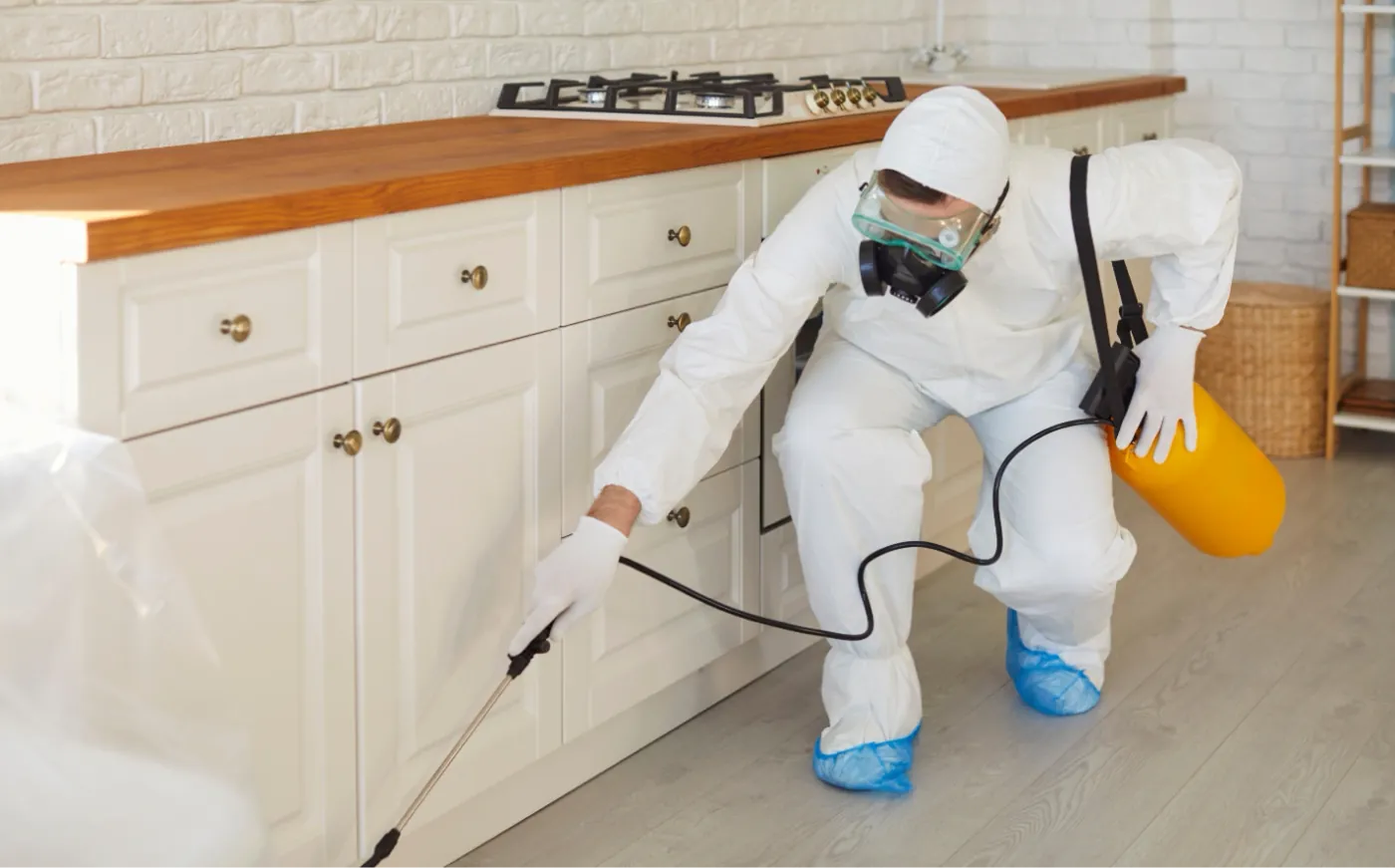
A tech moving a sprayer cracks a window, gouges a hardwood floor, or knocks a vase off a shelf and breaks it. That is physical damage to a third party’s property arising out of your operations — and that is the exposure general liability is written to answer, alongside the slip-and-fall it is best known for. The policy responds to the repair or replacement claim up to your limit and funds your defense if the customer disputes it, subject to your deductible. This is not a strained reading of the form; it is the form doing its routine job. The honest qualifier is the cause. General liability answers the damage your tech causes by handling equipment in someone else’s space. It does not answer damage caused by the product — that loss runs into the absolute pollution exclusion and over to a different policy. Get the cause right and the coverage answer follows.
The trap: identical damage, two different causes
Here is where operators get tangled. A ruined hardwood floor looks the same whether the tech gouged it dragging a tank rig across it or a product spill etched the finish — but those are two different losses on two different policies. The general liability form responds to property damage caused by your operations, and the absolute pollution exclusion carves out property damage that arises from a pollutant. A pesticide fits the way that exclusion defines a pollutant, so the moment the cause of the damage is the product rather than the equipment, the loss leaves general liability and runs to pollution liability. The visible damage cannot tell you which policy answers; only the cause can. That is the opposite of the slip-and-fall case, where the chemistry of a wet floor is a detail — here, when the chemical is the cause of the damage itself, it is the whole coverage question. An operator who reports a loss has to know which kind it was, because “the floor is ruined” routes one way if a sprayer scratched it and another way if a spill stained it.
Real-World Scenario: A technician treating a finished basement sets a heavy backpack sprayer down hard on a glass-topped console table, and the top cracks. The customer wants the table replaced. The operator reports it to the general liability carrier as third-party property damage — a tech’s equipment broke a customer’s property during the work — and that is exactly what the policy is built to answer. Had the same console instead been damaged by product leaking from the sprayer onto its finish, the cause would have been the chemical, the pollution exclusion would have applied, and the loss would have run to an applicator pollution policy instead. The broken glass is general liability’s; a chemical stain would not have been.
What is covered and what the form leaves out
General liability is built to respond to mechanical third-party property damage your crew causes on a service call: a window broken, a floor scratched, a fixture knocked loose, an appliance dented, a belonging toppled and shattered. It pays the repair or replacement claim up to your limit, subject to your deductible, and defends you if the customer disputes the loss. That is the routine property-damage exposure a crew working inside occupied homes and businesses generates every day, and the policy is sized around it.
Two limits inside the form are worth naming honestly so you are not surprised. First, the chemical seam already covered: product-caused damage is excluded and runs to pollution liability. Second, damage to the specific property you were hired to work on can fall under the “your work” and related “damage to property” exclusions, which treat the work itself differently from surrounding property — and the exact wording varies by form. That is a place to have the actual policy read against how your crews treat rather than assumed. And the deductible matters on small losses: a minor repair can fall under it entirely, which is why many operators simply make a customer whole on tiny accidents and reserve the policy for anything larger.
What actually responds, and where the line sits
On a clean mechanical-damage loss, your general liability policy responds: the carrier evaluates the third party’s repair or replacement claim, pays what is owed up to the limit, and funds your defense if it is contested. The line that matters for routing the claim is the cause — equipment and handling versus the product. Mechanical damage is general liability’s. Product-caused damage is pollution liability’s; if you want that seam in full, the companion read is does general liability cover pesticide drift to a neighbor, which walks the chemical-damage exclusion in detail. And the bodily-injury sibling to this property question — a customer hurt rather than property damaged — is covered in a customer slips on a freshly treated floor. The three together are how general liability’s core and its seams fit around a pest control operation. Where a large account demands limits above your primary layer, umbrella liability sits excess of this policy.
A practical check before the claim
You can keep these losses clean by getting two things right. First, report by cause: when something is damaged on a job, the question that decides the policy is whether your equipment and handling did it or the product did. Reporting it accurately routes it to the line built to answer it instead of getting it denied on the wrong policy. Second, carry both lines in force — general liability for the mechanical damage and pollution liability for the chemical damage — so neither kind of loss is stranded, and set your general liability limit to what your accounts demand. Have a broker who knows the pest control trade read the “your work,” “damage to property,” and pollution language against how your crews actually treat, fumigate, and inspect, rather than rating you off a generic contractor form. The federal and safety framework your applications run under — the EPA pesticide program, applicator standards under the EPA certification framework, and workplace safety under OSHA — sets the standard the work is measured against, and a clean record there supports the file; but the coverage routing is decided by the cause of the damage.
Before it happens, cover both kinds of damage
The damage your crew causes on a service call splits cleanly into two buckets, and an operation that wants to be made whole no matter which one happens carries both policies behind it. Carry general liability for the mechanical third-party property damage your techs cause handling equipment in someone else’s space, carry pollution liability for the product-caused damage the exclusion removes from it, and add umbrella liability where an account demands limits above your primary layer. How a policy is rated depends on your route, your accounts, and the work you do — see the cost drivers behind it, and how coverage fits a general pest control operation. When you are ready, start a quote and tell us how your crews treat, so the right line answers the right loss.