Coverage line
General Liability Insurance for Pest Control Contractors
The everyday third-party exposure of a pest control operation — a customer who slips on a freshly treated floor, property your tech damages on a service call — and the two seams where general liability stops and the signature coverages take over.
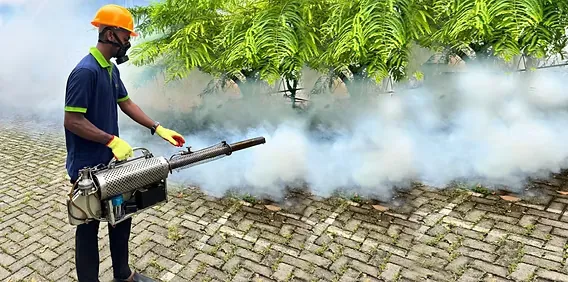

General liability is the coverage that answers for the people and property around your work — not your own techs, and not your own trucks or rigs, but everyone else who can be hurt or have something damaged while your crew treats a home, services a commercial account, or works a route. For a pest control operation it is the foundation policy: the one commercial accounts and property managers want to see first, the one your certificate-of-insurance and additional-insured requirements are built on, and the one that decides whether a third-party claim is a phone call or a lawsuit you pay out of pocket.
Pest control work is, at its core, public-facing service work performed on someone else’s property. Your techs are inside homes and businesses every day, leaving treated surfaces behind, moving through occupied space, and working around customers, occupants, and the public. That setting is where general liability earns its place — and it is also where two of the trade’s signature exposures sit in the seams general liability does not reach. This page is the hub for those seams: it shows what general liability covers, then names plainly the two places it stops and hands off.
What general liability covers for a pest control operation
General liability responds to third-party bodily injury and property damage arising from your operations, at the accounts and homes you service and after the job is done. For a pest control operation that means injuries to a customer, an occupant, or a member of the public around your work; damage to a customer’s property during a treatment; and — through products-and-completed-operations coverage — claims tied to your work and the products you apply that surface after your tech has left the site.
The everyday version of this is concrete. A customer slips on a floor your tech just wet-treated and is hurt — that bodily injury is the heart of general liability. A tech moving equipment through an occupied space knocks over and breaks a customer’s property, or a piece of gear scratches a finished floor — that property damage is general liability too. So is a member of the public tripping over staged equipment outside a commercial account. These are the routine third-party incidents a public-facing service route generates, and they are exactly what the policy is built around. What it does not reach is where the seams begin.
Where general liability stops: two coverage seams
This is the part worth being precise about, because both seams look like they should be covered and are not. The first is the pollution exclusion. When a pesticide or chemical application goes wrong — a misapplication, spray drift carrying product onto a neighboring property or garden, overspray reaching a water source, or a chemical exposure affecting an occupant — the standard general liability form carries an absolute pollution exclusion that drops it. Pesticides and the chemicals your operation applies fall squarely inside the way that exclusion defines pollutants, so the chemical-exposure and environmental-cleanup piece of the loss has no general liability response. That exclusion is exactly why a pest control operation carries a separate pollution liability policy, and it is the signature applicator exposure of the trade.
The second seam is professional liability, and it is defined by what general liability requires to respond: bodily injury or property damage. A missed termite or wood-destroying-organism inspection, an inaccurate inspection report, or a treatment that fails to take can cause a customer a serious financial loss — a sale that collapses, structural damage discovered later, a costly retreatment obligation — with no bodily injury and no physical damage from your work to point to. General liability is built for physical injury and property damage; a purely economic loss from your professional judgment falls through it. That is what professional liability (errors and omissions) is for, and it is the signature exposure of Termite & WDO Insurance. A pest control operation needs general liability for the physical third-party exposures and these two lines for the seams — written together, not assumed into one form.
How it works specifically for pest control
What separates pest control from ordinary contracting is that the exposure is public-facing and lives on other people’s property. Your techs are in occupied homes and operating businesses every day, leaving treated surfaces behind them, working around customers and occupants, and moving equipment through space they do not control. A wet-treated floor is a slip hazard your tech created on a customer’s premises. A treatment performed while a business is open puts your operation in the path of the public. Restaurant accounts, multifamily properties, schools, and healthcare facilities raise the stakes because more third parties are present. General liability is the line that responds when one of those third parties is the one harmed.
Because the exposure differs by operating model, the policy form has to fit the model. An General Pest Control Insurance operation carries a recurring-route, occupied-premises profile across many small accounts. A Fumigation Insurance operation carries a heavier gas and occupant-safety exposure that underwriters weigh differently. A Termite & WDO Insurance operation carries comparatively routine premises exposure but the heaviest professional-liability seam. Writing all three off one generic contractor form underprices one and leaves another exposed. We rate each to the real work and pair it with the right seam coverage.
Common claim categories
These are the categories underwriters expect on a pest-control general liability file. They are described qualitatively and with generic carrier language — every claim is handled by the carrier, never named here.
- Slip-and-fall on a treated surface. A customer, occupant, or member of the public is hurt slipping on a floor your tech just wet-treated, or trips over equipment staged at an account. The treated-surface hazard makes this the category carriers watch most closely on a pest control file.
- Property damage during a treatment. A tech damages a customer’s property on a service call — knocking over and breaking belongings, scratching a finished floor, or damaging fixtures while moving equipment or accessing a treatment area.
- Third-party injury at a commercial account. Someone is injured around your operation at a restaurant, multifamily property, or other occupied business while your crew is on site and working.
- Products-and-completed-operations allegations. After your tech leaves, a third party alleges resulting bodily injury or physical damage tied to your work or the products applied. How the form treats completed operations decides the outcome — and a purely financial complaint about an ineffective treatment is a professional-liability question, not this one.
Limits and structure
General liability is usually written with a per-occurrence limit and a separate aggregate that caps total payouts for the policy term, often with products-and-completed-operations tracked on its own aggregate. The right structure for your operation is driven by the work you do and the accounts you serve — whether you run general pest, fumigation, or termite and WDO work, the size and type of accounts on your route, the additional-insured and limit requirements your commercial accounts and property managers impose, and your claims history. Rather than quote a number, we read what your accounts and contracts actually demand and build the limit and endorsement structure to satisfy them. Where an account or a larger contract calls for limits above your primary layer, that is what umbrella liability is for, sitting excess of this policy.
Why Pest Control Guard Insurance
We are an independent agency that writes one trade — commercial pest control contractors — and we place coverage with carriers that actually want the class. That focus is the point. We know to ask whether you run general pest, fumigation, or termite and WDO work before we quote; to read the absolute pollution exclusion against your chemical applications so a drift or misapplication claim is not stranded; to separate the professional-liability seam from the general liability so a missed-inspection financial loss has a home; and to set the additional-insured and certificate requirements that keep a commercial account’s requirement from stalling your start. When a contract or a property manager lands on your desk with insurance requirements you do not recognize, that is a call we take. Start with a quote, or talk it through with us first.
Learn more
Pest-control coverage works as a system. General liability pairs most often with commercial auto for the trucks and mounted rigs running your route, workers compensation for your techs, commercial property and equipment for the shop and the gear, and umbrella liability when an account demands limits above your primary layer — and it leaves the two signature seams, pollution liability and professional liability, to their own policies. How it is written also differs by operating model across the three service pillars.
Coverage for pest control contractors
- Pollution Liability Insurance
- Professional Liability Insurance
- Commercial Auto Insurance
- Commercial Property & Equipment Insurance
- Workers Compensation Insurance
- Umbrella Liability Insurance
Pest control specialties
Coverage Explained
- Does General Liability Cover Pesticide Drift to a Neighbor?
- Customer Slips on a Freshly Treated Floor — Is It Covered?
- Does GL Cover Property Damage During a Pest Treatment?
- General Liability vs. Professional Liability: Failed Treatment
Get covered
Primary sources
Frequently asked questions about General Liability Insurance
What does general liability cover for a pest control operation?
General liability responds to third-party bodily injury and property damage that arise from your work — a customer or occupant hurt at an account you service, a member of the public injured around your operation, and damage to a customer’s property during a treatment. The classic example is someone who slips on a floor your tech just wet-treated. It does not cover injuries to your own crew, your trucks and mounted rigs, or the financial loss from a missed inspection — those sit under workers compensation, commercial auto, and professional liability.
Does general liability cover a pesticide drift or overspray claim?
Usually not in the way operators assume. General liability may respond to some immediate third-party damage, but the standard commercial general liability form carries an absolute pollution exclusion, and pesticide, herbicide, and chemical applications fall squarely inside the way that exclusion defines pollutants. The moment a misapplication, spray drift, overspray onto a neighboring property, or a chemical-exposure claim is the loss, general liability has no response. That gap is exactly why pest control operators carry a separate pollution/applicator policy, and we place it alongside the general liability so the chemical exposure is not stranded.
Does general liability cover a missed termite inspection or a failed treatment?
Not when the loss is purely financial with no bodily injury or physical damage to point to. A missed wood-destroying-organism inspection, a treatment that does not take, or an inaccurate inspection report can cost a customer real money — a property sale that falls through, structural damage discovered later, a retreatment obligation — without anyone being hurt or any of your work physically damaging property. That is a professional liability (errors and omissions) exposure, and general liability is built to answer for physical injury and property damage, not professional financial loss. A termite or WDO operation needs both lines in force.
Why do commercial accounts and property managers ask to be named on my general liability?
Because your work happens on their premises and a third-party claim can reach them. Commercial accounts, property managers, and larger contracts commonly require a certificate of insurance and additional-insured status on your general liability before you service the location. We set those endorsements and the certificate language to match what the account demands, so a coverage requirement does not stall your start or cost you the account.
Do I still need general liability if I carry workers compensation?
Yes — they cover different people. Workers compensation pays for injuries to your own technicians. General liability protects you when a third party — a customer, an occupant, a member of the public near your service call — is injured or has property damaged by your work. A pest control operation running daily routes and on-site treatments carries both, usually alongside commercial auto and the property and equipment coverage for the rigs.
Does general liability follow my techs to every account on the route?
A properly written general liability policy is built around your operations rather than a single address, and it is meant to respond at the homes and businesses your route covers, not just at your shop. The detail that catches growing operators is usually how the policy schedules operations and territory as the route expands into new areas or across state lines. We build the policy to where your techs actually treat rather than to a single home base, so the coverage tracks the route.
Does general liability pay to redo my own treatment if it does not work?
Standard general liability is built to respond to resulting third-party damage, not to redo your own work — the classic "your work" exclusion. A retreatment or callback to fix an ineffective treatment, with no physical damage to point to, is not what general liability answers for. If a failed treatment causes a customer a financial loss, that is a professional liability question; if defective work causes resulting physical damage, completed-operations language and the way the form treats it both matter and vary by form. We read the actual wording against the way your crews treat, fumigate, and inspect rather than rating you off a generic contractor form.
Get general liability built for the way your route runs
Tell us whether you run general pest, fumigation, or termite and WDO work and we will market it to carriers that write the pest-control class — with the pollution and E&O seams covered, not assumed.