Coverage line
Workers Compensation Insurance for Pest Control Contractors
Medical and lost-wage coverage for the injuries pest control technicians actually face — chemical exposure, ladder falls, crawlspace and attic work, repetitive strain, and the route driving that fills every shift — including the four states where comp comes only from a government fund.

Workers compensation is the policy that takes care of your crew when the work hurts them. It pays the medical bills and replaces a share of lost wages when a technician is injured on the job — and in nearly every state it is the coverage the law requires you to carry once you have employees. For a pest control operation it is not optional and it is not negotiable: it is the policy a commercial account checks before it lets your crew on site, the one your certificates have to show, and the one that decides whether an injured tech is a covered claim or a bill you pay out of your own pocket.
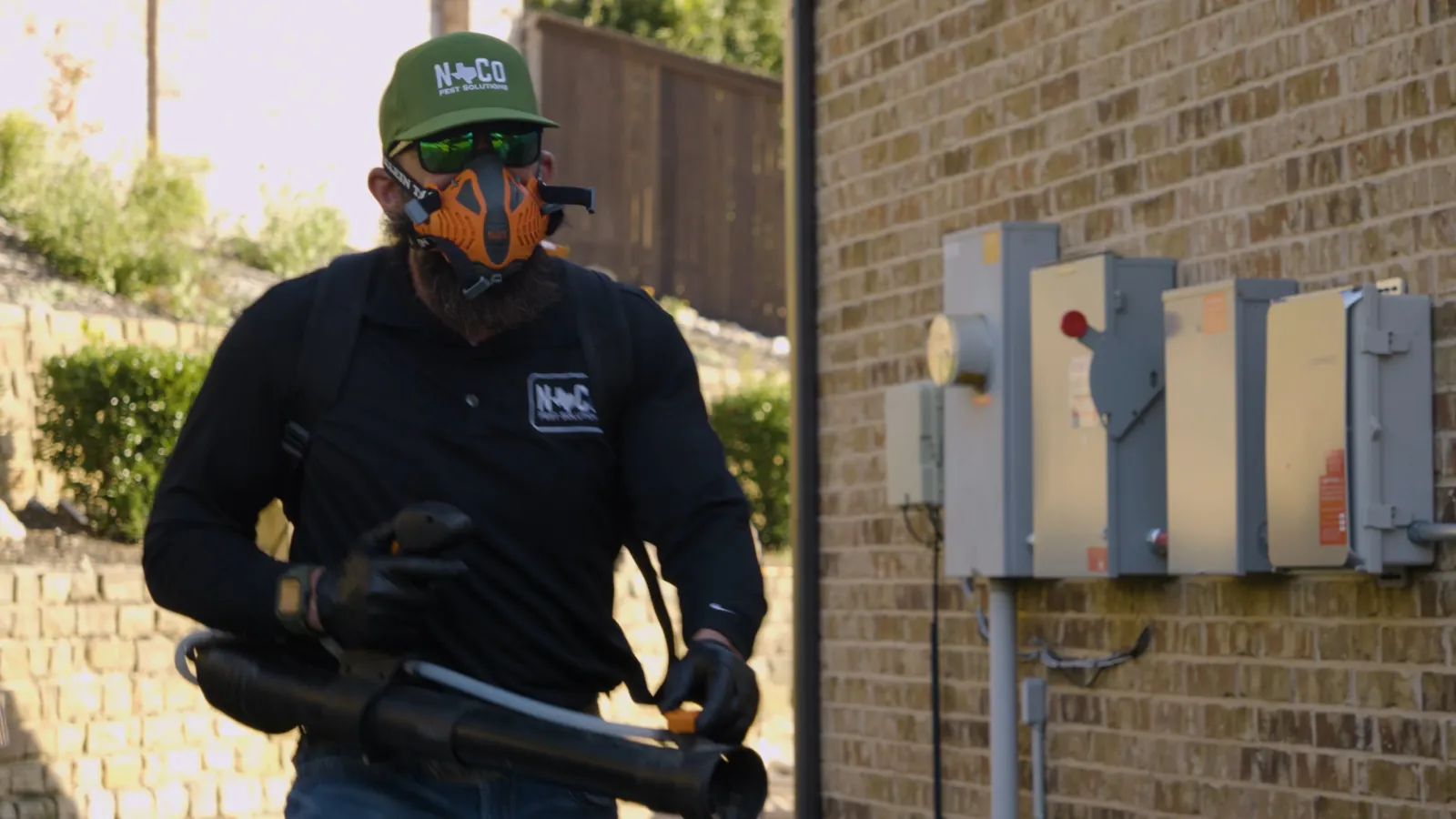
What makes comp matter so much for this trade is the injury profile. A pest control technician does not sit at a desk — they handle chemicals, climb ladders, crawl through tight spaces, lift and spray all day, and drive a route between accounts from morning to evening. Each of those is a real way to get hurt, and comp is the single line that responds to your own crew across all of them. Getting it structured correctly, and in force in every state your techs actually work, is the whole job.
What workers compensation covers for pest control crews
Workers compensation responds to your own employees’ work-related injuries and illnesses: medical treatment, a portion of lost wages while they recover, disability benefits, and death benefits to a family in the worst cases. For a pest control crew the injury profile is specific, and it is worth naming because it is what the coverage actually has to answer for:
- Chemical exposure to the technician. A splash, a spill, an inhalation, or a skin contact with concentrated product during mixing, application, or a fumigation job — harm to your own worker, which is what comp responds to.
- Falls. A ladder fall reaching a roofline or eave, a slip on a wet or uneven surface, or a fall on stairs while moving gear into an account.
- Crawlspace and attic injuries. Cuts, strains, heat, and falls working the tight, awkward spaces a termite, rodent, or general pest job routinely sends a tech into.
- Repetitive strain. The shoulders, backs, and wrists that wear down over years of hauling tanks, pulling hose, and spraying.
- Route driving. A technician injured in a vehicle crash while driving between accounts — comp covers the injury to your worker, while the vehicle side is commercial auto.
It is just as important to know where comp stops. It does not cover injuries to third parties or damage to someone else’s property — that is general liability, and for a chemical release the environmental side is pollution liability. It does not cover the vehicle in a route accident — that is commercial auto, the line that travels alongside comp. And it does not cover your sprayers, rigs, or stored product — that is commercial property and equipment. Knowing where each line ends is how an operation avoids a gap that only shows up when a claim falls into it.
How it works specifically for pest control technicians
Comp is rated on payroll and on the classifications your crew falls under, and for a pest control operation getting that classification right is the difference between a fair rate and a mis-rated one. The work a field technician does carries a different exposure than office or sales staff, and the mix of your crew matters. A General Pest Control route, a Fumigation crew, and a Termite & WDO team each carry their own injury patterns, and an underwriter expects them classified to the work actually performed.
The everyday reality the coverage has to map to is a tech moving through a full shift of exposures — mixing and loading product at the shop, driving the route, climbing and crawling at accounts, and handling equipment all day. Comp is the policy sitting underneath every one of those moments. Rather than rate you off a generic contractor class, we classify your crew to the pest-control work they do and place the program with markets that understand the trade.
Multi-state crews and the four monopolistic states
Many pest control operations work more than one state, and comp is a state-by-state system, so this is where structure matters. Your policy is written with a schedule of states where you expect your crew to work, and the benefits owed to an injured worker are generally governed by the state where the work is performed. An “other states” provision can extend coverage into states you pick up work in but did not name at the outset. The concepts of extraterritorial coverage and reciprocity vary by state and change over time, so this page describes how the structure works in general rather than asserting any specific state’s current rule as fact.
There is one hard exception worth being exact about. In four states — North Dakota, Ohio, Washington, and Wyoming — private insurers are not allowed to write workers compensation at all. These are called monopolistic states, and the only place to get the coverage is each state’s own government fund:
- North Dakota — Workforce Safety & Insurance (WSI), the state fund.
- Ohio — the Ohio Bureau of Workers’ Compensation (BWC), the state fund.
- Washington — the Department of Labor & Industries (L&I), the state fund.
- Wyoming — the state-administered workers compensation fund.
These are government programs, not private carriers — which is exactly why they can be named honestly here, and why they break the usual rules. For a pest control operation with techs in one of these four states, the consequence is concrete: your private workers compensation policy does not stretch to cover the exposure there. You obtain coverage through the state fund itself, and the obligation attaches when the work happens, not when you get around to the paperwork. We flag a monopolistic state on your footprint before your crew works there rather than after a claim.
Common claim categories
These are the categories an underwriter expects on a pest-control comp file. They are described qualitatively — every claim is administered by the carrier or the state fund, never named here, and no severity figures are stated.
- Chemical-exposure injury. A splash, spill, or inhalation harming the technician during mixing, application, or a fumigation job — the trade-defining comp exposure.
- Fall injuries. A ladder fall, a slip on a wet or uneven surface, or a fall moving gear into an account.
- Crawlspace and attic injuries. Cuts, strains, heat, and falls in the tight spaces a termite, rodent, or general pest job sends a tech into.
- Repetitive-strain and driving injuries. Shoulder, back, and wrist conditions from years of spraying and hauling, and a technician injured in a route crash while driving between accounts.
Limits and structure
Workers compensation benefits are largely set by each state’s statute rather than chosen the way you pick a liability limit, so the structure questions for a pest control operation are different: getting your crew classified correctly to the work they actually perform, scheduling the right states, attaching the employers-liability portion that handles injury suits falling outside the statutory benefit, and lining up the state-fund placements for any monopolistic state on your footprint. The employers-liability limits, and whether a contract requires them at a particular level, are driven by what your commercial accounts and larger contracts demand. Where a contract calls for limits above your primary layer, that is what umbrella liability reaches over. Rather than quote a number, we build the classification and state structure to the real operation.
Why Pest Control Guard Insurance
We are an independent agency that writes one trade — commercial pest control contractors — and we place comp with markets that actually want the class. That focus is the point. We know to classify a field technician to the pest-control work they do rather than a generic class, to ask where your crew works before we schedule states, and to flag a monopolistic state on your footprint before your techs work there rather than after a claim. When a commercial account hands you a certificate requirement you do not recognize, that is a call we take. Start with a quote, or talk it through with us first.
Learn more
Coverage for a pest control crew works as a system. Workers compensation pairs most closely with commercial auto — the other line tied to a crew on the road between accounts — and with general liability for the third-party exposures comp does not touch, plus umbrella liability when a contract demands limits above your primary layer. A chemical incident can touch both comp, for your own technician, and pollution liability, for the environmental and third-party side. How comp applies also depends on the work — see how it fits a General Pest Control Insurance operation, a Fumigation Insurance crew, or a Termite & WDO Insurance team.
Coverage for pest control contractors
- General Liability Insurance
- Commercial Auto Insurance
- Commercial Property & Equipment Insurance
- Pollution Liability Insurance
- Professional Liability Insurance
- Umbrella Liability Insurance
Insurance by pest control operation
Coverage Explained
Get covered
Primary sources
Frequently asked questions about Workers Compensation Insurance
What does workers compensation cover for a pest control crew?
Workers compensation responds to your own technicians’ work-related injuries and illnesses — medical treatment, a portion of lost wages while they recover, disability benefits, and death benefits to a family in the worst cases. For a pest control operation that means a tech who has a chemical exposure on the job, a fall from a ladder, an injury working a crawlspace or attic, a repetitive-strain condition from years of spraying and hauling, or a route driver hurt behind the wheel. If the person hurt is on your payroll and the injury comes out of the work, comp is the line that answers.
Does general liability or commercial auto cover an injured technician?
No. Workers compensation is the line that responds to your own crew’s on-the-job injuries. General liability covers injury or property damage to third parties — a customer or a bystander — not your employees, and commercial auto covers the operation of your vehicles, not the medical care and lost wages of an injured worker. If a technician is hurt on a route or at an account, comp is the policy that responds, which is why a pest control operator carries it alongside general liability and commercial auto rather than instead of them.
Does workers comp cover a chemical exposure to my own technician?
Yes — a work-related chemical exposure to your own technician is exactly the kind of injury workers compensation is built to respond to, with medical care and lost wages. It is worth keeping two things separate, though: comp answers for harm to your employee, while a chemical exposure that harms a customer, an occupant, or a neighboring property is a third-party matter handled by general liability and, for the environmental and pollution side, pollution liability. The same incident can touch more than one line, which is why the program is built so each exposure has a policy that responds.
What are the four monopolistic workers comp states?
North Dakota, Ohio, Washington, and Wyoming are monopolistic states — private insurers cannot write workers compensation there. Coverage is available only through each state’s government fund: Workforce Safety & Insurance (WSI) in North Dakota, the Bureau of Workers’ Compensation (BWC) in Ohio, the Department of Labor & Industries (L&I) in Washington, and the state-administered fund in Wyoming. These are government programs, not private carriers. A pest control operation with techs working in one of these states obtains coverage through the state fund — a private policy from another state does not stretch to cover the exposure there.
How is workers comp rated for a pest control operation?
Comp is built on payroll and the classifications your crew falls under, and your claims history and the states you operate in also factor in. The work a pest control technician does is classified to that field exposure rather than to a generic office or retail class. Rather than quote a rate, we classify your crew correctly to the work they actually perform and place the program with markets that understand pest control, so you are not mis-rated off the wrong class.
My techs work across more than one state — does comp follow them?
It can, but it is not automatic — it depends on how the policy is structured. Workers compensation generally follows your payroll and the state where the work is physically performed, so a crew based in one state running treatments in another can trigger requirements in both. The standard tools are the policy’s schedule of states and an “other states” provision. Because the rules around extraterritorial coverage and reciprocity vary by state and change over time, the right structure is set against your actual operating footprint rather than assumed — and in the four monopolistic states a private policy will not respond at all.
What happens if I do not carry workers comp where my techs are working?
Operating a crew in a state without the comp coverage that state requires exposes you to penalties and to paying an injured worker’s claim directly — and in the four monopolistic states, a private policy simply will not respond. Requirements differ by state and change, so this is not something to assume your way through. We structure the schedule of states and the state-fund placements to match where your techs actually work, so coverage is in force before the work starts.
Cover your crew the way the work actually puts them at risk
Tell us where your techs work and how your operation runs, and we will structure comp — schedule of states and all — with markets that write the pest-control class.