Insurance by operating model
Termite & WDO Insurance for Pest Control Contractors
Insurance for termite and wood-destroying-organism work — inspection, soil treatment, and baiting systems, where the signature exposure is the professional-liability (E&O) risk of the real-estate-transaction termite letter, alongside the pollution exposure of soil-treatment chemicals.
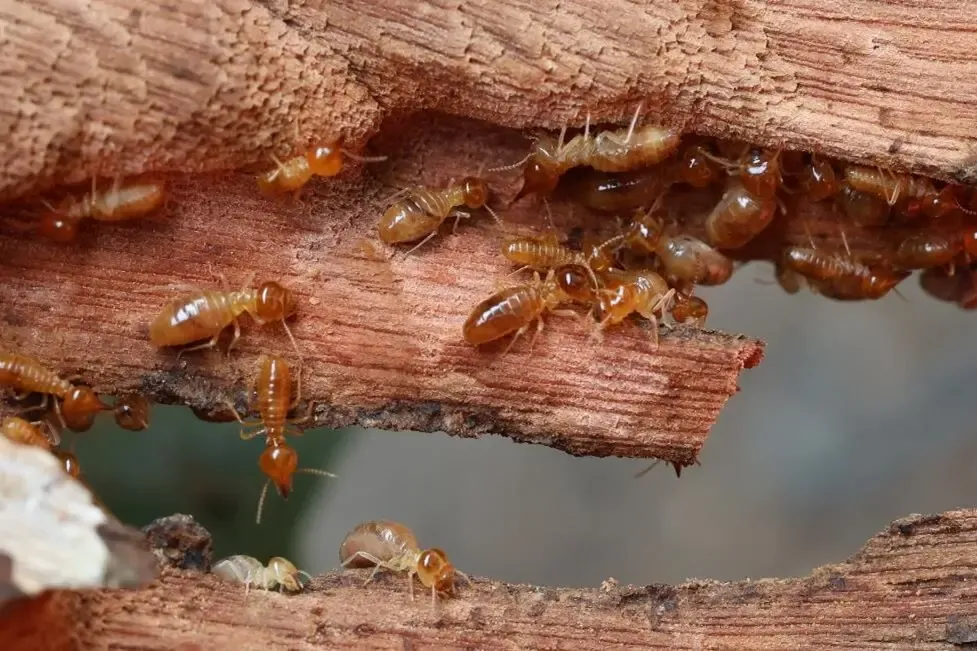

Termite and wood-destroying-organism work is its own operating model, not a single coverage line — and the way the work is done is what makes its insurance distinct. A termite and WDO operation inspects a structure for active infestation and damage, issues the report that documents what was found, and treats the building — a liquid soil termiticide barrier, an in-ground baiting system, or a structural treatment. There is no fumigation tent and no daily extermination route at the center of it. The defining work is inspecting, reporting, and treating, and that combination puts the risk in places a routine pest-control policy does not anticipate.
Here is the part that surprises operators who think of termite work as just another treatment: the signature exposure is not chemical contact or a slip on the job — it is the inspection report itself. The defining loss is the termite letter on a real-estate transaction that misses an active infestation a buyer or lender relied on, the treatment that fails and lets an infestation continue, or the re-infestation after a treatment you guaranteed. No one is hurt and nothing your crew touched is broken — but a buyer, seller, or lender loses money, and they look to your report and your work. That is a professional liability (errors and omissions) exposure, and it is the signature risk of the model. The lighter the physical exposure, the more your real risk concentrates in the accuracy and judgment of the inspection and treatment — which is exactly what E&O is built to answer.
The treatment side carries the second signature exposure: chemicals in the ground. A soil termiticide barrier, a misapplication, or an off-target release can reach a neighboring property, a garden, or a water source — and general liability carries a pollution exclusion that drops that chemical-exposure and cleanup loss. Pollution liability is the separate line written to fill that gap, and on a termite and WDO operation it sits alongside professional liability as a second central placement rather than an afterthought.
On top of those two, the model carries the ordinary realities of a contractor in the field — trucks and rigs that move between accounts, technicians on the job, stored chemical inventory, and the limit and certificate requirements commercial accounts and the real-estate transactions you serve impose. A policy rated to a generic exterminator underweights the report and strands the chemical exposure.
This page covers how termite and WDO insurance is built as a whole: what makes the inspection-and-treatment model different, the termite letter and the real-estate transaction, the state and regulatory picture, the coverage stack weighted toward professional and pollution, the cost drivers, how a claim unfolds, and how carriers underwrite the class. If your work is routine pest control or fumigation instead, the General Pest Control Insurance and Fumigation Insurance pages are built for those models.
Running termite and WDO work? Get a quote structured around your inspection reports, treatment warranties, and the chemicals your crew applies.
Get a Free QuoteWhat makes termite and WDO insurance different
Termite and WDO risk is inspection-and-treatment risk, and it lands on different coverage lines than routine pest work does. Professional liability carries the most weight, because the exposure that defines the model — a missed or wrong WDO letter, a failed treatment, a misdiagnosis that costs a client money — is professional and financial, not physical. Pollution liability carries the next most, because the soil-treatment chemicals you put in the ground are an environmental exposure general liability excludes. General liability still answers for the third-party injury and the non-chemical property damage of being on an account, but it hands the report exposure to E&O and the chemical exposure to pollution. A generic exterminator form, rated to routine service work, gets the weighting backwards and leaves both signature seams open.
The practical consequence is that two pest control contractors with similar revenue can carry very different exposures depending on how much of the scope is termite and WDO inspection and treatment. An operation issuing WDO letters on home sales and laying soil barriers looks nothing like a crew running a routine prevention route — and writing both off one form underprices the inspection-and-treatment work and strands the professional and pollution exposures. We separate the termite and WDO scope from any routine pest or fumigation work in the same book so neither is mispriced.
The termite letter and the real-estate transaction
The signature claim runs through a home sale. A buyer is under contract, a lender requires a wood-destroying-organism report, and your inspector walks the structure and issues the letter. The letter states what was found — and, by implication, what was not. The deal closes on that letter. Then, weeks or months later, an active infestation or damage that was present at the time of the inspection surfaces, and the buyer or lender who relied on the report faces repair costs and a structure worth less than they paid for. The question that follows is direct: should the inspection have caught it?
That is the shape of the professional liability claim that defines termite and WDO work. Your inspector did not break anything; the report missed a condition the parties to the transaction depended on, and the financial consequences rolled downhill onto whoever relied on it. None of it is bodily injury or property damage your crew caused — it is the economic loss of relying on a professional report that turned out to be wrong, which is precisely why general liability sits this one out and professional liability answers it. The mechanics of that gap — the bodily-injury-and-property-damage trigger, the financial-loss coverage, the defense, and the claims-made structure — are the whole subject of the professional liability page, so rather than restate them here we point you to it and stay on what the operating model means: the termite letter is your highest-stakes deliverable, and the discipline of the inspection and the report is where the exposure is won or lost.
State and regulatory considerations
Termite and WDO work sits at the intersection of pesticide regulation, structural-pest licensing, and worker safety — and the rules vary by state. The chemicals run through the federal EPA pesticide (FIFRA) framework, which governs how a termiticide is labeled and used, and applicator certification flows from the EPA pesticide applicator certification program administered state by state. On the ground, licensing usually runs through a state department of agriculture or a state structural pest control board or commission, and many states regulate the WDO and termite inspection itself — who may sign a report, the form it must take, and the disclosures it must carry — separately from the treatment license. Those WDO report forms and inspection rules differ markedly from one state to the next, which is part of why the report exposure is so state-sensitive. Worker safety on the job runs through OSHA, and workers compensation rules vary too — including the four monopolistic states where coverage comes only from the state fund, which matters for a crew that works across state lines.
Pest pressure concentrates termite and WDO activity in the warm, humid regions, and as our state pages come online we link the licensing, inspection-form, and applicator specifics for the states we serve. Tier-1 termite and WDO activity is heaviest in states such as Florida, Texas, North Carolina, South Carolina, and Georgia, and we write across all 48 licensed states.
Coverage breakdown
Here is the stack a termite and WDO operation carries, weighted for the inspection-and-treatment model. Each line links to its full page — and the two that carry the most weight, professional liability and pollution liability, are the signature placements.
- Professional Liability Insurance (E&O) — the signature line: financial loss from a missed or wrong termite or WDO inspection, a failed treatment, or a misdiagnosis, where nothing physical was damaged and general liability does not respond. The professional liability page covers the mechanism in full.
- Pollution Liability Insurance — the other signature line: the chemical-exposure, drift, off-target, and cleanup loss from soil-treatment termiticides, the environmental exposure general liability excludes.
- General Liability Insurance — third-party bodily injury and property damage on an account, with the report exposure handed to E&O and the chemical exposure to pollution.
- Commercial Property & Equipment Insurance — the shop, office, and stored chemical inventory you work from, plus the truck-mounted rigs, sprayers, drilling and baiting gear, and tools moved between jobs.
- Commercial Auto Insurance — the trucks and service-route vehicles that carry your crew, mounted tanks, and gear between accounts and across state lines.
- Workers Compensation Insurance — injury coverage for your technicians, structured for the chemical-exposure and route-driving profile and the multi-state-payroll reality.
- Umbrella Liability Insurance — excess limits above the primary liability layers that larger commercial accounts and contracts often demand.
The two that define the trade are professional liability and pollution liability. The professional liability page explains the E&O mechanism — how a financial loss with no physical damage falls outside general liability — and the pollution liability page explains the chemical-exposure gap, so rather than restate either here, we point you to them and concentrate on building the whole termite and WDO stack around them.
What termite and WDO insurance costs
Premium tracks the work, not a sticker price. The drivers that move it most are your payroll and the technician and inspector classifications it covers, how much of your scope is termite and WDO inspection and treatment versus routine pest or fumigation work, whether you issue WDO letters on real-estate transactions and carry treatment warranties or guarantees, the chemicals you apply and how you handle and store them, the value of your truck-mounted rigs and equipment and where it is stored, your fleet and route footprint, the limit and certificate requirements your accounts and real-estate clients impose, your multi-state footprint, and your claims and inspection history. An operation issuing WDO letters on home sales and laying soil barriers looks very different to an underwriter than one doing light, occasional termite work under someone else’s report. We price to that real picture and stand behind any figure we give — verified ranges come from us directly, never a generic guess.
Claims scenarios
These are plausible termite and WDO claim categories, described qualitatively and with generic carrier language — every claim is handled by the carrier, never named here — and with no fabricated cost or frequency figures.
- Missed termite letter on a home sale. A WDO letter on a real-estate transaction misses an active infestation or damage present at the time of inspection, the buyer or lender relied on it, and the repair cost and lost value become a financial loss traced to the report — the signature professional-liability exposure of the model.
- Failed or guaranteed treatment and re-infestation. A treatment does not control the infestation, or an infestation returns after a treatment backed by a warranty or guarantee, and the client absorbs the cost of the continued problem and the corrective work — a professional-liability question turning on the commitment in the service agreement.
- Soil-treatment chemical exposure. A termiticide barrier, a misapplication, or an off-target release reaches a neighboring property, a garden, or a water source — the chemical-exposure and cleanup loss pollution liability answers and general liability excludes.
- Third-party injury or property damage on the job. Someone is hurt around the work, or property is physically damaged during a treatment or a drilling operation — the general-liability exposure any job site carries.
Underwriting realities
Carriers writing the termite and WDO class look at the shape of the inspection-and-treatment work as much as the physical exposure. They want to know whether your scope involves WDO letters on real-estate transactions, treatment warranties and guarantees, and the inspection and report discipline behind them — because that is where the professional-liability exposure lives — along with the chemicals you apply and how you handle them, your crew and inspector classifications, your equipment list and where it is stored, the states you work in, and your loss history. Documented inspection protocols, disciplined report practices, clearly written treatment warranties, and a clean chemical-handling and claims record open more markets; a missed-inspection or chemical-exposure loss narrows them. A contractor who also runs a routine pest route or a fumigation division gets those portions underwritten separately, on their own risk profiles. We position your termite and WDO operation to the carriers most likely to want the class rather than sending one generic submission everywhere.
Why Pest Control Guard Insurance
We write one trade — commercial pest control contractors — and within it we treat termite and WDO work as the inspection-and-treatment model it is. We weight your stack toward the professional-liability and pollution exposures the work actually carries, read the E&O wording — the financial-loss trigger, the defense, the retroactive date — against your WDO letters and service agreements before a policy binds, read the pollution wording against the chemicals your crew puts in the ground, schedule the rigs and equipment that move between accounts, structure workers compensation for a crew that crosses state lines, and structure general liability, professional liability, and pollution as one program so a claim cannot fall into the seam between them. When a commercial account or a real-estate client asks for E&O limits you do not recognize, that is a call we take. Start with a quote, or send us a service agreement and we will tell you what limits and coverage it requires.
Learn more
Termite and WDO work is one of three pest control operating models we write. The signature exposures live on the professional liability (E&O) page — the termite-letter and failed-treatment gap — and the pollution liability page — the soil-treatment chemical exposure. If your work is routine pest control or fumigation, the General Pest Control Insurance and Fumigation Insurance pages are built for those models — and the pest control services overview explains how the three differ. Where your crew works shapes the program through our state pages.
Coverage for termite and WDO operations
- General Liability Insurance
- Commercial Property & Equipment Insurance
- Workers Compensation Insurance
- Commercial Auto Insurance
- Pollution Liability Insurance
- Umbrella Liability Insurance
- Professional Liability Insurance
Pest control specialties
Get covered
Primary sources
Frequently asked questions about Termite & WDO Insurance
What insurance does a termite and WDO contractor need?
A termite and wood-destroying-organism operation typically carries professional liability, pollution liability, general liability, commercial property and equipment, commercial auto, workers compensation, and an umbrella as its core stack — but the weight sits differently than on a routine pest-control crew. The defining work is inspection and treatment, so the signature exposure is professional liability (E&O) for a missed or wrong inspection a buyer or lender relied on, and pollution liability for the soil-treatment chemicals you put in the ground. We build the stack around inspection and treatment work rather than rating you off a generic exterminator policy.
Why is professional liability so important for termite and WDO work?
Because the signature loss of inspection work is financial, not physical, and general liability is written to answer only bodily injury and property damage. When a termite or WDO letter misses an active infestation a buyer or lender relied on in a home sale, no one is hurt and nothing your crew touched is broken — but the parties who relied on the report absorb repair costs and a deal that goes sideways. That purely economic loss falls outside general liability and into professional liability (E&O). It is the signature coverage for the inspection-and-treatment model, which is why we treat it as central rather than optional. The professional liability page explains the mechanism in full.
Does general liability cover a missed termite inspection?
Not when the only harm is financial. General liability responds to third-party bodily injury and property damage — someone hurt around your work, or property your crew physically damages on the job. A WDO letter that misses an active infestation injures no one and breaks nothing physical; the harm is the economic consequence of a report a buyer or lender relied on and that turned out to be wrong. That sits outside the general liability form and inside professional liability (E&O). The two lines divide physical and financial harm between them, which is why an inspection-and-treatment operation carries both — we read the seam rather than assume one policy answers everything.
Does a treatment warranty or guarantee mean I do not need E&O?
No — if anything a guarantee raises the exposure. When your service agreement promises a result, such as a re-treatment guarantee or a warranty on a termite job, you are making a professional commitment about the outcome of the work, and a re-infestation or a failed treatment is exactly where a client claims the financial loss they absorbed. The guarantee defines the standard you are held to; it does not insure the loss when the standard is missed. Whether re-performance, mitigation, or the client financial loss is addressed turns on the E&O wording, which is why we read the form against your service agreements before you bind.
Why does termite and WDO work carry a pollution exposure?
Because the treatment side puts chemicals into the soil and around a structure. A liquid soil termiticide barrier, a misapplication, or an off-target release can reach a neighboring property, a garden, or a water source — and general liability carries a pollution exclusion that drops exactly that chemical-exposure and cleanup loss. Pollution liability is the separate line written to fill that gap. On a termite and WDO operation it sits alongside professional liability as a second signature placement, because the model carries both the inspection-report exposure and the soil-treatment chemical exposure. The pollution liability page covers the mechanism in full.
How does workers compensation work when my crew works across state lines?
It has to be built to. Many termite and WDO operations run accounts and inspections across more than one state, and workers compensation is the line that most often catches a contractor that follows the work — extraterritorial provisions, reciprocity, and the four monopolistic states where coverage comes only from the state fund all bear on whether your techs are covered where they actually work. Getting it wrong shows up as a gap mid-job or a surprise at audit. We structure workers compensation for the real multi-state payroll picture rather than a single home base.
Do commercial accounts and real-estate clients require E&O from termite contractors?
Increasingly, yes. As WDO reports, treatment guarantees, and inspection accuracy have become conditions on real-estate transactions and commercial accounts, more clients and the lenders behind them ask their termite and WDO contractor to carry professional liability alongside general liability and the rest of the program. The exact requirement varies by account and by transaction. We help you read what an account or a real-estate client actually demands and structure E&O to satisfy it, so a missing line does not cost you the work or hold up a certificate.
How is termite and WDO insurance different from general pest control or fumigation coverage?
The risk shape is different. General pest control is the everyday service-route model, and fumigation carries a gas and occupant-safety profile — both are largely physical and operational. Termite and WDO work concentrates its real exposure in two places a routine pest policy underweights: the inspection report, where a missed or wrong WDO letter is a professional-liability loss, and the soil treatment, where the chemicals are a pollution exposure. That is why the termite and WDO stack leans toward professional liability and pollution rather than the lines that define the other two pillars.
Insure your termite and WDO work the way it actually runs
Tell us about your inspection reports, your treatment warranties, and the chemicals your crew applies, and we will market it to carriers that write the termite and WDO class.