Insurance by operating model
Fumigation Insurance for Pest Control Contractors
Insurance for structural fumigation crews — the gas-fumigant, occupant-safety, aeration, and re-entry exposures of tenting and clearing a whole structure, and the pollution risk that sets fumigation apart from routine pest work.
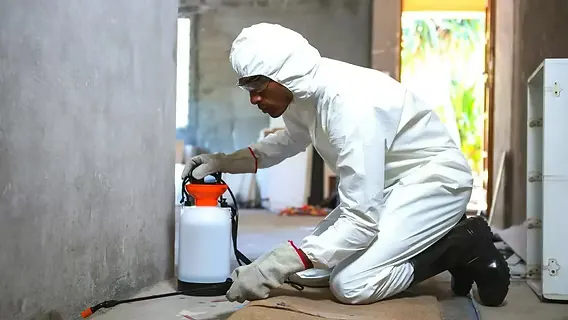

Structural fumigation is its own operating model, not a coverage line — and it is the highest-hazard work a pest control book carries. A fumigation crew does not spray a perimeter or set a bait station; it seals or tents an entire structure, introduces a regulated gas fumigant into the sealed space, monitors and then aerates the structure, and clears it for re-entry only once it reads safe. The whole method depends on holding a toxic gas inside an occupied-adjacent building and getting every person and animal out of, and then safely back into, that space. That is a very different risk picture from a route tech applying a labeled product at a baseboard — and it demands a program built around the fumigation cycle.
One exposure defines the model and concentrates the risk: the acute chemical-exposure event. A gas fumigant that escapes to building occupants or a neighbor during the seal or gas phase, an aeration cycle that does not fully clear the structure, or a re-entry before the space is safe is a serious, immediate chemical-exposure and pollution event — not a slow contamination, but a here-and-now hazard to people. That acute exposure is the signature fumigation risk: it is the loss most likely to be uninsured, because the policy an operator assumes will respond — general liability — is the one form written to exclude pollution and chemical dispersal. That gap is why pollution liability is the signature coverage for a fumigation operation, carried alongside general liability.
On top of the gas itself, the model carries a real property exposure that routine pest work does not. The tented structure, the landscaping under and around the tent, and the contents inside it are all at risk during the cycle, and the tarps, monitors, blowers, and gear your crew owns travel between jobs and sit at the site. The crew that handles the fumigant is exposed to it, and the larger accounts — commercial buildings, multi-unit structures, commodity and agricultural work, and property-management contracts — attach insurance, limit, and additional-insured requirements a fumigation operation has to meet to win the work.
This page covers how fumigation insurance is built as a whole: what sets the acute fumigation hazard apart from routine pest work, the fumigation cycle and where the exposure concentrates, the full coverage stack the operating model needs, the drivers that move cost, and how carriers underwrite a fumigation operation. If your work is routine route work or termite-led instead, the General Pest Control Insurance and Termite & WDO Insurance pages are built for those models.
Running structural fumigations? Get a quote structured around your fumigation cycle, your tented-structure exposure, and the pollution risk the gas carries.
Get a Free QuoteWhat makes fumigation insurance different
Fumigation risk is acute chemical risk, and it lands hardest on a few coverage lines in a way a generic pest-control form does not anticipate. Pollution liability carries the most weight, because a gas escape, an aeration failure, or a bad re-entry is a chemical-exposure event the standard general liability form excludes — the signature seam of fumigation work. General liability still answers for the third-party injury and the non-chemical property damage around the job, but it hands the chemical-exposure piece off. Commercial property and equipment matters more than on routine work because the tented structure, its contents, and the fumigation gear are all exposed during the cycle. And umbrella liability becomes a contract requirement on larger fumigation accounts. A policy rated to general pest control treats none of these with the emphasis a fumigation operation needs.
The practical consequence is that two pest control contractors with similar revenue can carry very different exposures depending on how much of the scope is fumigation. A crew that tents structures and handles a restricted-use gas fumigant looks nothing like a crew that runs interior glue-board and baseboard work — and writing both off one form underprices the gas and strands the chemical-exposure piece. We separate the fumigation scope from any general pest or termite work in the same book so neither is mispriced, and so the highest-hazard line is rated as what it is.
The fumigation cycle and where the risk concentrates
A fumigation is a cycle, and the exposure shifts as the work moves through it. The crew first seals or tents the structure, closing it up so a gas can be held inside. It then introduces the gas fumigant into the sealed space at a measured concentration. The crew monitors the structure through the exposure period, then aerates it — opening and ventilating until the gas clears — and finally clears it for re-entry once monitoring reads the space safe for people and animals. The acute event lives across the gas, aerate, and re-entry stages: a fumigant that escapes to occupants or a neighbor during the seal or gas phase, an aeration or re-entry failure where the structure is opened or occupied before it is fully cleared. The diagram below maps the operating model — seal/tent, introduce gas, monitor and aerate, clear for re-entry — with the acute chemical-exposure event marked where the risk concentrates.
State and regulatory considerations
Fumigation sits at the intersection of restricted-use pesticide regulation, environmental rules, and worker safety — and the rules vary by state. The gas fumigants a fumigation crew uses are regulated under the federal pesticide framework administered by the U.S. EPA under FIFRA, including label-mandated application, monitoring, aeration, and re-entry requirements. Because fumigants are restricted-use products, the crew handling them generally needs the restricted-use fumigant applicator certification their state requires under that framework, and many states route structural fumigation through a state department of agriculture or a structural pest control board. Worker safety around the gas, the seal, and the aeration runs through OSHA standards, and workers compensation rules vary too — including the four monopolistic states where coverage comes only from the state fund, which matters for a crew that fumigates across state lines.
As our state pages come online we link the licensing, certification, and re-entry specifics for the states we serve. Tier-1 fumigation activity is concentrated in the warm, humid, high-pest-pressure states where structural fumigation is most common — states such as Florida, California, Texas, Georgia, and North Carolina — and we write across all 48 licensed states.
Coverage breakdown
Here is the stack a fumigation operation carries, weighted for the acute-hazard model. Each line links to its full page — and the two that carry the most weight for fumigation work, pollution liability and general liability, are the signature placements.
- Pollution Liability Insurance — the signature fumigation line: the cleanup, third-party chemical-exposure injury, and defense for a gas escape, an aeration failure, or a bad re-entry, the loss general liability excludes. The pollution page covers the mechanism in full.
- General Liability Insurance — third-party injury and the non-chemical property damage around the job and the tented structure, with the chemical-exposure piece handed to pollution liability.
- Commercial Property & Equipment Insurance — the tented structure and its contents during the cycle, plus the tarps, monitors, blowers, and fumigation gear your crew owns, in transit and at the job.
- Workers Compensation Insurance — for the crew that handles the gas fumigant, structured for the multi-state, chemical-handling reality of a traveling fumigation operation.
- Commercial Auto Insurance — the trucks and trailers that haul the tarps, gas, and crew between fumigation jobs and across state lines.
- Umbrella Liability Insurance — excess limits the larger fumigation accounts, commercial buildings, and property-management contracts demand above the primary layer.
- Professional Liability Insurance — the errors-and-omissions seam for an inspection or treatment recommendation that causes a financial loss without physical damage, a different exposure from the chemical event.
What fumigation insurance costs
Premium tracks the fumigation work, not a sticker price. The drivers that move it most are your payroll and the crew classifications it covers, how much of your scope is structural fumigation versus general pest or termite work, the gas fumigants and structures you fumigate, the value of the tarps, monitors, and gear you own and where it is stored, the sensitivity of the occupants and neighbors around the structures you tent, the limit and additional-insured requirements your commercial accounts and contracts impose, your multi-state footprint, and your claims and certification history. A crew tenting occupied-adjacent structures with a restricted-use gas looks very different to an underwriter than one doing light, low-intensity work. We price to that real picture and stand behind any figure we give — verified ranges come from us directly, never a generic guess.
Claims scenarios
These are plausible fumigation claim categories, described qualitatively and with generic carrier language — every claim is handled by the carrier, never named here — and with no fabricated cost or frequency figures.
- Gas exposure to an occupant or neighbor. A fumigant escapes the sealed structure during the gas or seal phase and reaches a building occupant, an adjacent unit, or a neighboring property — the acute chemical-exposure loss most specific to fumigation work.
- Aeration or re-entry failure. A structure is opened, returned to occupants, or re-entered before it is fully cleared, exposing people or animals to residual gas — a high-severity chemical-exposure claim driven by the clearance step.
- Property in the tented structure. The structure, its contents, or landscaping under and around the tent is damaged during the seal, gas, or aeration cycle — a property loss tied directly to the fumigation method.
- Third-party property and bystander claim. The tent, the seal, or the work damages a neighboring property or affects a bystander around the job site beyond the structure being fumigated.
Underwriting realities
Carriers writing the fumigation class look at how the gas is handled: payroll and crew classifications, the fumigants and structures you work with, how often you tent and the kind of structures involved, the value of your tarps, monitors, and gear and where it is stored, your applicator certification and re-entry protocol discipline, your subcontractor controls, and your loss history. Documented fumigation protocols, current restricted-use applicator certification, strong monitoring and re-entry clearance procedures, and a clean chemical-exposure history open more markets; a serious gas-exposure or re-entry loss narrows them. Contractors who also run general pest or termite divisions get those portions underwritten separately so the high-hazard fumigation scope is not subsidizing — or stranding — the rest of the book. We position your operation to the carriers most likely to want a fumigation risk rather than sending one generic submission everywhere.
Why Pest Control Guard Insurance
We write one trade — commercial pest control contractors — and within it we treat fumigation as the high-hazard, chemical-exposed operation it is. We weight your stack toward the pollution, liability, property, and excess exposures a fumigation crew actually carries, read the pollution wording against the way your crew tents and clears a structure rather than assuming it away, schedule the tarps, monitors, and gear that travel between jobs, account for the tented structure during the cycle, structure workers compensation for a crew that handles a restricted-use gas across state lines, and set the subcontractor and additional-insured requirements that keep a fumigation sub’s gas-escape off your policy. We place coverage with carriers that want the fumigation class. Start with a quote, or send us a contract and we will tell you what limits and pollution coverage it requires.
Learn more
Fumigation is one of three pest control operating models, and the coverage stack shifts with the work. The signature fumigation exposure lives on the pollution liability page, alongside general liability. If your work is routine route work or termite-led, the General Pest Control Insurance and Termite & WDO Insurance pages are built for those models — and the pest control contractor services overview explains how the three differ.
Coverage for fumigation operations
- General Liability Insurance
- Commercial Property & Equipment Insurance
- Workers Compensation Insurance
- Commercial Auto Insurance
- Pollution Liability Insurance
- Umbrella Liability Insurance
- Professional Liability Insurance
Pest control specialties
Get covered
Primary sources
Frequently asked questions about Fumigation Insurance
What insurance does a fumigation contractor need?
A structural fumigation operation typically carries general liability, pollution liability, commercial property and equipment, commercial auto, workers compensation, and an umbrella as its core stack. The weight sits differently than it does for routine pest work: the gas fumigant concentrates the risk in an acute chemical-exposure event — a fumigant reaching occupants or a neighbor, an aeration or re-entry failure — that the standard general liability form is written to exclude, and the tented structure adds a property exposure on top. We build the stack around the fumigation cycle itself rather than rating you off a generic pest-control or contractor policy.
Why is pollution liability so important for fumigation work?
Because the signature loss of structural fumigation is a chemical-exposure event, and the policy an operator assumes will respond is the one form written to exclude it. A gas fumigant that escapes to building occupants or a neighbor, an aeration cycle that does not fully clear the structure, or a re-entry before the space is safe is a pollution condition — and the standard general liability form carries an absolute pollution exclusion that drops it. Pollution liability is the separate line that fills exactly that gap. It is the signature coverage for the fumigation side of a pest control book, alongside general liability, which is why we treat it as central. The pollution liability page explains the mechanism in full.
Does holding fumigant applicator certification mean I am covered if something goes wrong?
No. Holding the restricted-use fumigant applicator certification your state requires under the federal pesticide framework, and following the label and re-entry protocols, is the standard of care, and it is essential — but certification is not coverage. A seal can fail, a monitor can read wrong, a structure can be cleared a step early, and an exposure can still arise on a job where your crew did everything right. A clean certification and protocol record strengthens your file and your defense; it does not remove the exposure or replace the policy. We build the program for the exposure that happens despite a clean protocol.
Is the structure I tent covered while it is under fumigation?
The tented structure and the property around it are a real exposure during a fumigation, and how the program treats it depends on your scope and the wording. Damage to the structure, to landscaping under or around the tent, or to contents during the seal, gas, and aeration cycle can become a claim, and the fumigation tarps, monitors, blowers, and gear your crew owns are insured as your equipment in transit and at the job. We confirm how each line treats the structure under tent and the gear at the site before you bind, so the property side of a fumigation job is not an afterthought.
How does workers comp work for a fumigation crew that travels?
It is one of the trickier parts of running a fumigation operation that follows the work. Fumigation crews handle a restricted-use gas and travel between jobs and sometimes across state lines, so workers compensation has to account for payroll earned across state lines, extraterritorial and reciprocity rules, and the four monopolistic states where coverage comes only from the state fund. The chemical-handling injury profile also shapes the classification. Getting this wrong shows up as a gap mid-job or a surprise at audit, so we structure workers compensation for the multi-state, gas-handling reality of a fumigation crew.
Why do larger accounts and contracts drive my fumigation limits?
Larger fumigation accounts — commercial buildings, multi-unit structures, agricultural and commodity work, and property-management contracts — frequently demand liability limits, additional-insured status, and pollution coverage higher and broader than a primary policy carries on its own. An umbrella is the efficient way to reach the liability limits, and pollution liability with the right limit satisfies the chemical-exposure requirement a fumigation scope triggers. When a contract specifies requirements you do not currently meet, that is usually the conversation, and we size the program to the requirement rather than quote a number.
Do my fumigation subcontractors need their own insurance?
Yes, and on fumigation work it matters more than almost anywhere. If you sub out tenting or fumigation, a subcontractor’s gas-escape or re-entry failure happened on your account and under your service agreement, so the loss can roll up onto your general liability and your pollution exposure fast. The standard discipline is written subcontract agreements, certificates of insurance confirming each fumigation sub carries its own pollution liability, and additional-insured status flowing up to you. We help you set those requirements so a sub’s chemical-exposure loss does not become yours.
Insure your fumigation work the way you tent and clear a structure
Tell us about your fumigation cycle, your gear, and the accounts and contracts you sign, and we will market it to carriers that write the fumigation class.