Coverage line
Commercial Auto Insurance for Pest Control Contractors
Coverage for the service-route fleet a pest control operation drives every day — the trucks with mounted tanks, the daily-stop accident exposure, the chemicals moving between accounts, and the hired and non-owned auto a generic form underwrites blind.
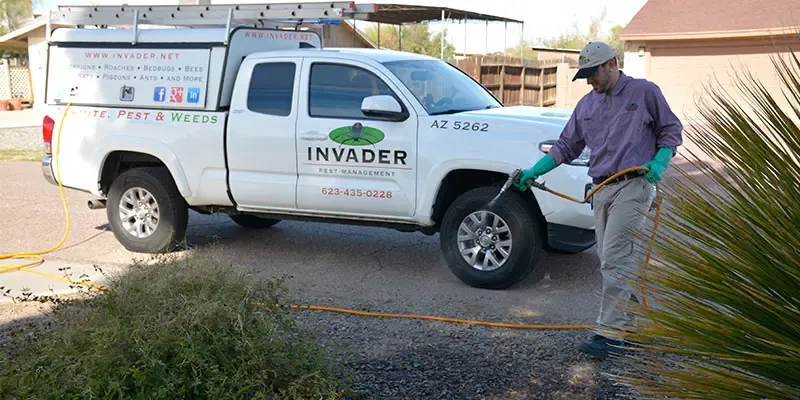

Commercial auto is the policy that covers your vehicles and the people driving them — the route trucks that carry your techs and tanks from account to account, the vehicles with mounted sprayers, and anything you put on the road to do the work. For a pest control operation that fleet is the business in motion, and it is the part of the operation most likely to put you in front of a serious third-party claim. A route truck makes dozens of stops in traffic and at customer properties every day, and every one of those stops is a chance for an accident the contractor answers for.
What makes auto distinctive for this trade is the rhythm of the work: daily-stop route driving, all day, with techs in and out of the vehicle at one account after another. That is a different exposure than a vehicle that drives to a single site and parks. More stops, more backing in driveways and lots, more time pulling in and out of traffic — the route itself is the risk. Commercial auto is the line, alongside workers compensation, that has to be built for a fleet that runs a full route every day.
What commercial auto covers for a pest control fleet
Commercial auto responds to the vehicles and their operation: liability for bodily injury and property damage you cause to others while operating your route trucks, and physical damage to those vehicles themselves from collision or other causes. Through the right endorsements it can add hired and non-owned auto for vehicles you rent or that your crew uses for the work. On a pest control route that means a truck rear-ending a car at a stop, a vehicle backing into a customer’s property, a fender-bender pulling out of an account, or storm and collision damage to the truck itself.
The single most important thing to be clear on is the seam between the vehicle and the gear on it. Commercial auto covers the vehicle. It does not cover the specialized equipment mounted on or carried by that truck — the sprayer rig, the mounted tank, the fumigation and termite gear. That equipment is insured under the equipment side of your program, contractors equipment inland marine. Auto also does not respond to injuries to your own technicians — that is workers compensation — and it does not answer for a chemical release or the operations exposures of the work itself, which are the province of pollution liability and general liability. Knowing exactly where the auto line stops is how you keep a claim from falling into the gap between two policies.
How it works specifically for pest control
Picture the route, because that is what the coverage has to map to. A tech loads out in the morning with a truck that may carry a mounted tank and a sprayer rig, and then runs a full day of daily stops — pulling into driveways, backing in lots, parking at commercial accounts, and threading traffic between them. The driving exposure is concentrated in those stops and maneuvers, not in long highway miles, and it repeats dozens of times a shift. That is the exposure underwriters rate, and it is why a route fleet is a different animal than a vehicle that rarely leaves the yard.
There is also the cargo. Pest control trucks transport concentrated product between accounts all day, and that raises a coordination question most operators have never been walked through: the driving itself is commercial auto, the property value of the product in transit sits with the equipment and property line, and a chemical release is a pollution exposure. A General Pest Control route, a Fumigation operation, and a Termite & WDO outfit each move product differently, and the diagram below maps the route-fleet exposure to what commercial auto actually responds to.
Hired and non-owned auto
One gap deserves its own section because operators so rarely see it coming. Your fleet policy covers the trucks your business owns. It does not, on its own, cover a vehicle you do not own being used for the work — a rented truck during a busy stretch, or a technician who runs to pick up product or covers a stop in their personal car. Hired and non-owned auto is the coverage that responds in those situations. Without it, an accident in a rented or personal vehicle used for the business can fall outside your fleet policy entirely, leaving the operation exposed for a loss it assumed was covered. For a pest control operation where crews are flexible and a tech might run an errand in their own car, this is a routine endorsement we make sure is in place rather than an afterthought discovered at claim time.
Common claim categories
These are the categories an underwriter expects on a pest-control auto file. They are described qualitatively — every claim is handled by the carrier, never named here, and no severity figures are stated.
- At-fault collision with a third party. A route truck causes an accident at a stop or in traffic; the liability for the other driver’s injury and property damage lands on the operation.
- Backing and maneuvering damage. A truck backs into a customer’s property, a fence, or a gate at an account — the everyday exposure of a fleet making dozens of daily stops.
- Physical damage to your own trucks. A collision, a rollover, or storm damage to a route vehicle — the line that gets the truck back on the road.
- Hired and non-owned auto loss. An accident in a rented truck or a technician’s personal vehicle being used for the work.
Limits and structure
Commercial auto is usually written with a combined-single-limit or split-limit liability structure, physical-damage coverage on the scheduled vehicles, and the hired-and-non-owned endorsement layered on. The right structure for a pest control operation is driven by the fleet itself — the number and type of route vehicles, how they are equipped, the daily-stop exposure, and the limits your commercial accounts and larger contracts demand. Where a contract calls for limits above your primary auto layer, that is what umbrella liability reaches over, sitting excess of this policy. Rather than quote a number, we read what your contracts actually require and build the fleet schedule and limit structure to satisfy them — and we coordinate the auto, equipment, and pollution lines so the truck, the gear on it, and the product it carries are each covered by the policy meant for them.
Why Pest Control Guard Insurance
We are an independent agency that writes one trade — commercial pest control contractors — and we place auto with markets that actually want the class. That focus is the point. We know to build the auto schedule and the equipment schedule together so a mounted sprayer never falls between two policies, to rate the daily-stop route exposure for what it is rather than a generic delivery class, and to make sure hired and non-owned auto is in place before a tech runs an errand in their own car. When a commercial account hands you a certificate requirement you do not recognize, that is a call we take. Start with a quote, or talk it through with us first.
Learn more
Coverage for a route fleet works as a system. Commercial auto pairs most closely with commercial property and equipment — the line that covers the sprayer rigs, tanks, and gear riding on your trucks — and with workers compensation, the line that responds to a technician injured on the route, plus general liability for the operations exposures auto does not touch and pollution liability for a chemical release from product in transit. Higher limits come through umbrella liability when a contract demands them. How the fleet is built also depends on the work — see how it fits a General Pest Control Insurance operation, a Fumigation Insurance crew, or a Termite & WDO Insurance team.
Coverage for pest control contractors
- General Liability Insurance
- Commercial Property & Equipment Insurance
- Workers Compensation Insurance
- Pollution Liability Insurance
- Professional Liability Insurance
- Umbrella Liability Insurance
Insurance by pest control operation
Coverage Explained
- Do I Need Commercial Auto for My Pest Control Trucks?
- Pesticide Spills From the Truck — Does Auto Cover It?
Get covered
Primary sources
Frequently asked questions about Commercial Auto Insurance
What does commercial auto cover for a pest control fleet?
Commercial auto responds to the vehicles and their operation: liability for bodily injury and property damage you cause to others while operating your route trucks, and physical damage to those vehicles themselves from collision or other causes. On a pest control route that means a truck rear-ending a car at a stop, a route vehicle backing into property at an account, or storm and collision damage to the truck itself. It is the line that puts your fleet back on the road and answers for the harm a work vehicle does — distinct from the personal auto policy that is not built for business use.
Does commercial auto cover the mounted sprayer or tank on my truck?
No — and this is the distinction that catches operators off guard. Commercial auto covers the vehicle and its operation: the truck, the chassis, and the liability and physical damage tied to driving it. The specialized equipment mounted on or carried by that truck — the sprayer rig, the mounted tank, the fumigation and termite gear — is insured under the equipment side of your program, contractors equipment inland marine, covered on the commercial property and equipment page. If a route truck is in a wreck, auto responds to the vehicle and the equipment line responds to the mounted gear. We make sure the two policies meet so nothing on the truck falls between them.
Does commercial auto cover the chemicals my techs transport between accounts?
It is more nuanced than a yes or no, and worth understanding before you assume coverage. Commercial auto is built for the vehicle and its road operation, and a standard auto form generally is not the line that responds to a pollution or environmental loss from cargo it carries — the chemical-release exposure is addressed by pollution liability, and the property value of the product in transit by the equipment and property side. What auto squarely responds to is the driving itself: the crash, the third-party injury, and the damage the vehicle does. Because pest control trucks move concentrated product all day, we coordinate the auto, equipment, and pollution lines so the cargo exposure is not left to a form that was never meant to carry it.
What is hired and non-owned auto, and do I need it?
Hired and non-owned auto coverage responds when a vehicle your business does not own is used for the work — a rented truck during a busy stretch, or a technician running an errand for the job in their personal vehicle. Without it, an accident in a rented or personal vehicle used for business can fall outside your fleet policy. For a pest control operation where a tech might pick up product or cover a stop in their own car, it closes a common and expensive gap that operators rarely think about until a claim exposes it.
Does my commercial auto policy follow my fleet across state lines?
A properly written commercial auto policy generally covers your vehicles wherever they are driven within the United States, which is what a multi-state route operation needs. The exposure that grows with more territory is usually not geography itself but volume and conditions — more miles, more daily stops, unfamiliar routes, and more time on the road. That is why commercial auto is one of the lines, alongside workers compensation, that has to be built for a fleet that runs a full route every day rather than a vehicle that rarely leaves the lot.
What does commercial auto cover that my personal auto policy will not?
A personal auto policy is written for personal use and typically excludes or limits business use, especially for trucks used in a service operation with mounted equipment. Commercial auto is built for that use: the route vehicles, the equipment they carry, and the higher liability exposure of running a fleet that makes daily stops in traffic and at customer properties. Running route trucks on personal auto is how a serious claim ends up denied. Commercial auto is the line that is actually designed to respond.
Get commercial auto built for a fleet that runs a route every day
Tell us about your route trucks and how they are equipped, and we will structure the fleet — and coordinate it with your equipment and pollution coverage — with markets that write the pest-control class.