Coverage line
Pollution Liability Insurance for Pest Control Contractors
The chemical exposure at the core of pest control work — a pesticide misapplied, drift onto a neighbor’s property, a customer or bystander exposed, soil or water contaminated. The coverage standard general liability flatly excludes.
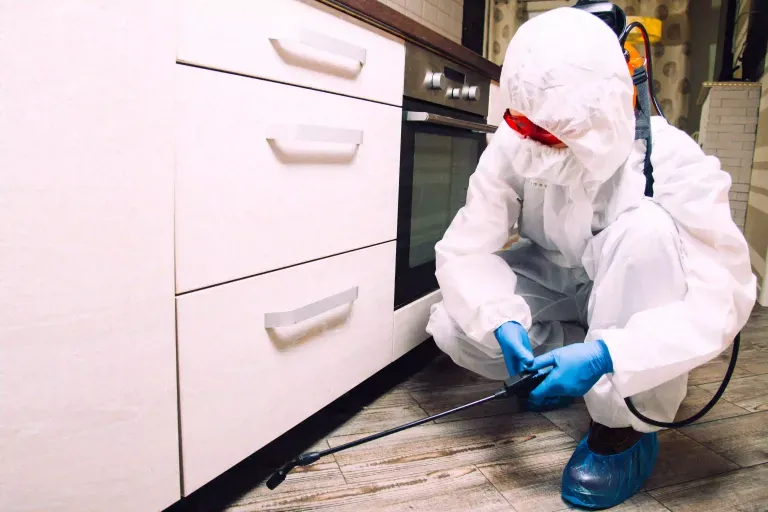

Pollution liability is the coverage that answers for the chemical side of pest control work — the part of every treatment that the rest of your insurance stack quietly leaves out. When your techs apply a product, they are dispersing a regulated chemical into an environment that may hold a neighbor’s garden, an occupant’s living space, a pet, a water source, or the soil around a structure. If that product reaches somewhere it should not — a yard next door, a person, a stream — the loss that follows is not a dented truck or a slip-and-fall. It is a release into property, a body, or the ground, and a cleanup or injury claim that follows you long after the crew has packed the rig.
This is the pest control operator’s defining risk, because the pesticide is not incidental to the work — it is the work. A locksmith carries the chemicals of the building; a painter carries solvent. But for your crew, the application of an Environmental Protection Agency-regulated product is the service itself, performed dozens of times a day across a route. And the exposure it creates is the one most likely to be uninsured, because the policy a contractor assumes will respond is the one form built to exclude it. For a pest control operation, pollution liability is not an add-on. It is the line that stands between a drift complaint or an exposure claim and a bill your general liability policy will not touch.
Why general liability does not cover pollution
Start with the gap, because it is the whole reason this page exists. The standard commercial general liability form — the policy a pest control contractor leans on for third-party bodily injury and property damage — carries what the industry calls the absolute, or total, pollution exclusion. It removes from coverage the bodily injury and property damage that arise out of the actual, alleged, or threatened discharge, dispersal, seepage, migration, release, or escape of pollutants, where pollutants are defined as irritants and contaminants including chemicals. That language is broad on purpose, and underwriters read it broadly.
The practical effect for a pest control operator is blunt: the pesticide is the pollutant. When a treatment drifts onto a neighbor’s property, when a customer or occupant alleges a chemical exposure, or when a misapplication contaminates soil or water, your general liability policy has no response to the chemical piece of that loss. It is not a coverage that gets argued down at the margins — it is excluded by design. That is exactly why general liability and pollution liability are written as two separate lines that sit side by side. General liability handles the third-party injury and the non-chemical property damage — a ladder through a window, a tech who knocks over a display. Pollution liability picks up the contamination, the cleanup, and the chemical-exposure claim that general liability hands off. An operator carrying only general liability has a hole in the program shaped exactly like the trade’s signature loss, and it is the line your work runs through every single day.
Pesticide misapplication and chemical exposure
Misapplication is the first half of the signature exposure. Your techs work fast, across many stops, applying products at specified rates to specified sites under specified label conditions — and the margin for a chemical to go wrong is real. The wrong rate, the wrong product for the site, an application in conditions the label prohibits, a label-restriction violation, or treatment of an area that should not have been treated: each can put a chemical where it does not belong and at a concentration it should not be.
The exposure that worries operators most is the human and animal side of it. A customer, an occupant of a treated building, a bystander walking past an exterior application, or a pet in the treatment zone can allege exposure to a product — and the resulting bodily-injury claim is, on the general liability form, a chemical dispersal that the pollution exclusion takes out. The U.S. Environmental Protection Agency administers pesticide labeling and use as a matter of federal law under its pesticide program (EPA — Pesticides), and a misapplication is measured against that standard. Holding the right state applicator certification (EPA — Pesticide Applicator Certification) and worker-safety practice under OSHA strengthens your defense — but a claim can still arise on a job where your tech did everything right, and the chemical piece of it is the part general liability excludes.
Drift and overspray onto neighboring property
Drift is the second half, and it is the one most outside your tech’s control once the product leaves the equipment. An off-target application — spray carried by wind, vapor moving after the fact, overspray past the edge of the treatment area — can land on a neighbor’s garden, landscaping, vegetable beds, ornamental plants, a koi pond, or a water source feeding their property. The treatment at the account looked routine; the problem appears next door, sometimes downwind and a distance away, on property you were never hired to touch.
Sensitive sites raise the stakes. An application near an organic grower, a beekeeping operation, a residential garden, a wetland, a well, or surface water turns a routine drift event into a contamination claim with its own cleanup standard and its own third-party exposure to the neighbor and, potentially, a regulator. Damaged or destroyed landscaping is a property-damage claim; a contaminated water source is an environmental condition; an affected sensitive crop can be a substantial loss. Each is the part of the loss the general liability pollution exclusion has already removed. Pollution liability is the line written to respond to off-target drift: the remediation of the affected ground, water, or landscaping, the third-party property-damage and bodily-injury claim, and the defense of the matter that follows.
Why pest control work specifically needs it
Plenty of trades carry a pollution endorsement as a precaution against a chemical they rarely touch. For your crew, the chemical is the job. Applying EPA and FIFRA-regulated products is the core of the service, performed on a route, at scale, across customer properties and the spaces around them. That changes the math. The exposure is not a remote possibility tucked into a corner of the operation — it is built into the method itself, every stop, every application.
That is why pollution liability is the signature coverage for a pest control book, and why it is read differently across your service models. General pest control applies products on a route through occupied homes and businesses; fumigation concentrates the exposure in a gas-and-occupant-safety profile that sets it apart; termite and wood-destroying-organism work puts product into the soil around a structure. A contractor who fumigates carries an exposure a contractor who only does interior glue-board work does not, and writing both off one generic contractor policy underprices the risk and leaves the chemical exposure open. The way we structure the program follows the work and the products: the more chemical intensity in your scope, the more central this line becomes.
What pollution liability responds to
Stated plainly and qualitatively — because the specifics live in the policy form and your scope of work, not in a fabricated dollar figure — pollution liability is built to respond across three areas when your work causes a pollution condition:
- Cleanup and remediation costs. The recovery, removal, and disposal of a released product, and the remediation of the soil, groundwater, surface water, or landscaping it affected — including the work a regulator may demand to close out the condition.
- Third-party bodily injury and property damage. Injury to a customer, occupant, bystander, or their pet from a chemical exposure, or damage to a neighboring property, garden, or water source from drift — the chemical claims the general liability pollution exclusion has already removed from that policy.
- Defense costs. The legal cost of responding to the claim, the regulatory demand, or the lawsuit, which on a chemical-exposure or environmental matter can be a substantial part of the exposure on its own.
What the line responds to, and on what terms, comes down to the wording — whether it is written as a standalone environmental policy or as applicator pollution coverage, and how it defines a covered pollution condition. That is the reading we do against your scope of work before you bind, so the form actually matches the products your route applies.
Common claim categories
These are the categories underwriters expect on a pest control pollution file. They are described qualitatively and with generic carrier language — every claim is handled by the carrier, never named here — and with no fabricated cost or frequency figures.
- Drift onto a neighboring property. An off-target application or overspray reaches a neighbor’s garden, landscaping, water source, or sensitive site, damaging plants or contaminating water and drawing a third-party claim — the category most specific to outdoor route work.
- Misapplication or over-application. The wrong product, rate, or site, or a label-restriction violation, puts a chemical where it does not belong, creating a contamination and remediation obligation on the treated property and beyond it.
- Chemical exposure of an occupant or bystander. A customer, an occupant of a treated structure, a passerby, or a pet alleges illness or injury from a product your crew applied — a bodily-injury claim the general liability pollution exclusion removes.
- Environmental contamination of soil or water. A spill, a release, or a treatment that migrates contaminates soil, a well, or surface water, triggering an environmental cleanup the standard general liability form excludes.
Limits and structure
Pollution liability is generally written with a per-occurrence limit and a separate policy aggregate, and it can be arranged either as a standalone environmental policy or as applicator pollution coverage packaged alongside your other lines. The right structure for your operation is driven by the work you actually do and the accounts you sign — how much of your scope is general pest versus fumigation versus termite and wood-destroying-organism treatment, the products and rates you apply, the sensitivity of the sites and the water you treat near, your claims and compliance history, and the limit and additional-insured requirements your commercial accounts and contracts impose. Rather than quote a number, we read what your accounts demand and build the limit and the form to satisfy them. Where a job calls for limits above your primary layer, that is what umbrella liability is for, and where a missed inspection or a failed treatment causes a financial loss with nothing physically damaged, that is the seam professional liability answers — a different exposure from the chemical condition this page is about.
Why Pest Control Guard Insurance
We are an independent agency that writes one trade — commercial pest control contractors — and within it we treat the applicator pollution exposure as the signature risk it is. That focus is the point. We know to ask about the products you apply and the sites you treat before quoting, to separate your general pest, fumigation, and termite scope so none is mispriced, to read the pollution wording against the way your crew actually applies product, and to set the subcontractor and additional-insured requirements that keep an added crew’s drift off your policy. When a commercial account lands on your desk with environmental insurance requirements you do not recognize, that is a call we take. Start with a quote, or talk it through with us first.
Learn more
Pollution liability works as one line in a system built for the way pest control crews operate. It pairs most often with general liability — the policy whose absolute pollution exclusion is the reason this page exists — and with professional liability for the missed-inspection and failed-treatment exposure that is financial rather than chemical, commercial auto for the trucks that carry the rigs, commercial property and equipment for the shop and the gear, and umbrella liability when an account demands limits above your primary layer. The exposure is defined by the work, so see how it sits inside Fumigation Insurance and Termite & WDO Insurance, the service models where chemical intensity runs highest.
Coverage for pest control contractors
- General Liability Insurance
- Professional Liability Insurance
- Commercial Property & Equipment Insurance
- Commercial Auto Insurance
- Workers Compensation Insurance
- Umbrella Liability Insurance
Pest control specialties
Coverage Explained
- Does General Liability Cover Pesticide Drift to a Neighbor?
- Is a Customer Chemical-Exposure Claim Covered by Insurance?
- Tech Sprayed the Wrong Chemical or Wrong Yard — Covered?
- Does Pest Control Insurance Cover EPA Fines & Cleanup?
Get covered
Primary sources
Frequently asked questions about Pollution Liability Insurance
Does general liability cover a pesticide drift or misapplication claim?
No — not the chemical part of it. The standard commercial general liability form carries an absolute pollution exclusion that strips out the release, escape, or dispersal of pollutants, and for a pest control operator the pesticide is the pollutant. When a treatment drifts onto a neighbor’s garden, an occupant is exposed to a product, or a misapplication contaminates soil or water, the resulting cleanup and bodily-injury claim falls squarely inside that exclusion — so your general liability policy has no response to it. Pollution liability, sometimes written as applicator coverage, is the separate line built to fill exactly that gap, which is why pest control contractors carry it alongside general liability rather than instead of it.
Why is a pesticide treated as a pollutant on my insurance?
Because the general liability form defines pollutants broadly — irritants and contaminants including chemicals — and the products your techs apply are regulated chemicals under the federal pesticide framework. Underwriters read that exclusion broadly on purpose. The very thing that makes pest control valuable to a customer, the active chemistry of the treatment, is what the general liability pollution exclusion is written to remove. That is not a quirk of one carrier; it is how the line is structured across the market. Pollution liability is the line that responds to the chemical condition your application can cause.
What does pollution liability respond to for a pest control operator?
Pollution liability is built to respond to the cleanup of a pollution condition your work causes, to third-party bodily injury and property damage arising from that condition, and to the cost of defending the claim. For a pest control crew that means the remediation of contaminated soil, landscaping, or water, the bodily injury of a customer, occupant, bystander, or pet exposed to a product, the damage to a neighboring property hit by drift, and the legal defense that follows. The exact triggers and terms live in the policy form, which is why the wording is read against your scope of work before you bind.
Is a chemical-exposure claim from an occupant a pollution claim or a general liability claim?
For a chemical exposure the pollution exclusion is the trap. A customer or occupant who alleges illness or injury from a product your techs applied is asserting bodily injury arising from the dispersal of a chemical — and that is exactly what the general liability pollution exclusion takes out, even though general liability is the policy an operator assumes will respond to a person getting hurt. Without a pollution liability policy sitting alongside, the chemical-exposure piece of the loss has no coverage. The two lines are written to be carried together for this reason.
Does following the label and applicator rules mean I do not need pollution liability?
No. Applying a product to its label and holding the right state applicator certification under the federal framework is the standard of care, and it is essential — but it does not remove the exposure. Wind shifts, a sensitive site goes unflagged, a rate is read wrong, a non-target plant or pet is in the treatment zone. A drift or exposure claim can still arise on a job where your tech did everything right, and a clean compliance record strengthens your file and your defense without replacing the coverage. Pollution liability is what responds when the claim comes anyway.
Do my subcontractors or added crews need their own pollution coverage?
If you sub out treatment work or run added crews, a subcontractor’s drift or misapplication can become your problem fast, because the loss happened on your account and under your service agreement. The standard defenses are written subcontract agreements, certificates of insurance confirming each applicator sub carries its own pollution liability, and additional-insured status flowing up to you. We help you set those requirements so a sub’s chemical loss does not land on your policy unprotected.
How are pollution liability limits structured for a pest control contractor?
Pollution liability is generally written with a per-occurrence limit and a policy aggregate, and it can be arranged as a standalone environmental policy or as applicator pollution coverage packaged with your other lines. The right structure is driven by your scope of work — your mix of general pest, fumigation, and termite or wood-destroying-organism treatment, the products and rates you apply, the sensitivity of the sites and water you treat near, and the limit and additional-insured requirements your commercial accounts and contracts impose. We read what your accounts actually demand and build the limit to satisfy them rather than quote a number.
Cover the exposure your general liability policy excludes
Tell us how your route runs and what your crew applies, and we will market it to carriers that write pollution coverage for pest control contractors.