States we serve · Indiana
Indiana pest control contractor insurance
Wexford’s home state — a steady Midwest market with moderate termite pressure and broad general-pest demand. We write the applicator pollution, professional liability, general liability, property and equipment, commercial auto, and workers compensation that Indiana general pest, fumigation, and termite operations actually need.

Indiana pest control operations run a year of routes, treatments, and inspections, and a policy rated to a generic Indiana contractor misses what actually decides a pest control operator’s claims: the chemical that drifts onto a neighboring property, the missed termite letter on a home sale, the tech exposed to product all day, and the trucks and equipment that run the routes. This page walks the cost drivers, the verified Indiana licensing picture, the state’s pest pressure, the risks we see, and the major Indiana markets — and links the coverage and service detail throughout.
What Indiana Pest Control Insurance Costs
There is no single Indiana price, and any number quoted before an underwriter sees your operation is a guess. What actually moves a Indiana pest control operator’s premium is the shape of the work. The biggest drivers are your payroll and technician classifications, your mix of general pest control, fumigation, and termite and WDO work, your chemical and pollution exposure, the size of your fleet, the limits your commercial accounts demand, and your claims history. A structural fumigation operation looks very different to an underwriter than a prevention-route operation. We rate each operation to its real exposure rather than off one generic contractor class. For how those drivers play out and what actually moves the number, see our Indiana pest control insurance cost guide.
Indiana Pest Control Licensing & Regulation
Pest control is a licensed trade in Indiana, and getting the licensing right is the foundation an underwriter and a commercial account both expect.
State pest control licensing
Commercial structural pest control in Indiana is licensed under the federal FIFRA framework — applicator certification plus a pest control business license. Indiana administers structural pest control through a named state program rather than a standalone licensing board. The licensing authority is the Office of Indiana State Chemist. The practical takeaway: a Indiana pest control business must hold the right license and employ a certified commercial applicator responsible for its work — and a commercial account or larger contract will layer its own insurance and certificate requirements on top of that, which we confirm before you mobilize.
State insurance regulator & worker safety
Insurance in Indiana is overseen by the Indiana Department of Insurance (IDOI), which regulates the admitted carriers your program is placed with. On the job, pesticide use runs through the federal EPA FIFRA framework, while worker safety — chemical handling, respiratory protection, and confined-space work in crawlspaces and attics — runs through OSHA standards, all of which underwriters read as part of your risk control.
Indiana Pest Pressure & Market
A Midwest market with a summer-peak general-pest calendar, moderate subterranean termite pressure, and steady rodent and overwintering-pest demand across the metro areas.
The honest framing: pest pressure in Indiana is not uniform across the state, and the service mix shifts with climate, housing stock, and the local calendar. Cold winters concentrate the season; southern Indiana carries somewhat higher termite pressure than the north. That spread is why we weight each operation’s coverage to where and how it actually works rather than to a statewide average.
Common Indiana Pest Control Risks
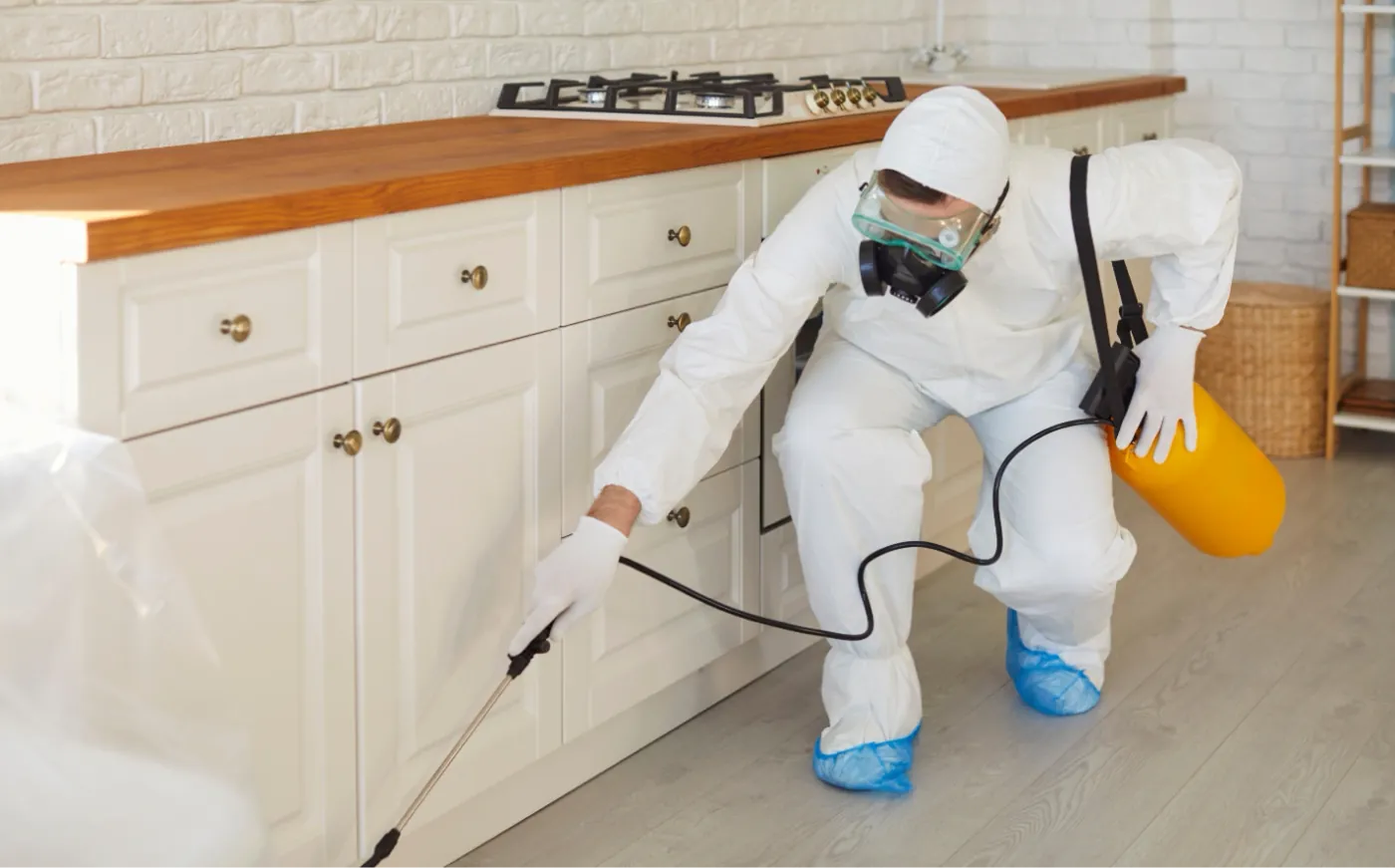
Indiana layers the trade’s own hazards onto its local season and market. The diagram below maps the operating risks a Indiana pest control operator carries to the coverage lines that respond — the misapplied or drifting chemical to applicator pollution liability, the missed termite or WDO inspection to professional liability, the slip or property damage on a service call to general liability, the techs and trucks on the routes to workers compensation and commercial auto, and the rigs and stored chemical to commercial property and equipment.
Common Indiana Pest Control Claims We See
These are the claim categories an underwriter expects on a Indiana pest-control file. They are described qualitatively and with generic carrier language — every claim is handled by the carrier, never named here.
- Pesticide drift, overspray, or misapplication. A chemical reaches a neighboring property, a garden, or a water source, or an occupant or bystander is exposed — an applicator pollution exposure that a standard general liability policy excludes, and the signature pest-control claim.
- A missed termite or WDO inspection. A termite or WDO report a Indiana buyer or lender relied on missed active infestation or damage — a financial-loss claim with no bodily injury or property damage, a professional liability exposure general liability does not reach.
- A slip or property damage on a service call. A customer slips on a freshly treated floor, or a tech damages property during a treatment — a third-party general liability exposure on the routes and at the accounts.
- Equipment or chemical loss from a truck or shop. A mounted rig, sprayer, or stored chemical inventory is stolen or damaged — a commercial property and equipment loss across a fleet that runs the state every day.
Why Indiana Pest Control Contractors Choose Pest Control Guard Insurance
We write one trade — commercial pest control operators — and we place coverage with carriers that actually want the class. In Indiana that focus matters. We know to treat applicator pollution liability as core rather than an afterthought, to weight professional liability for an operation that issues WDO and termite reports, to schedule the rigs and stored chemical that ride the trucks, to structure workers comp around how your crews actually work, and to confirm the state licensing and the commercial-account requirements before you mobilize. When a Indiana property manager or commercial account sends over insurance requirements you do not recognize, that is a call we take.
Major Indiana Pest Control Markets
Wexford’s home state — a steady Midwest market with moderate termite pressure and broad general-pest demand.
Pest pressure and service mix shift across Indiana, so we place coverage across the state’s major metro markets — from Indianapolis to Bloomington — and weight each operation’s program to where its routes and accounts actually are. These are the major Indiana pest control markets we place across:
- Indianapolis
- Fort Wayne
- Evansville
- South Bend
- Carmel
- Bloomington
Indiana is one of the 48 states we are licensed in. As each state page comes online you can compare licensing, pest pressure, and market conditions across every state we serve.
Related Reading
Indiana coverage works as a system. Start with the two lines that define the trade — applicator pollution liability and professional liability — then the property and equipment and commercial auto that follow the gear and the trucks. By operating model, see general pest control insurance, fumigation insurance, and termite and WDO insurance. To compare other states, use the states we serve index.
Indiana Pest Control Insurance FAQs
Do pest control contractors need a license in Indiana?
Yes. Commercial structural pest control in Indiana is licensed under the federal FIFRA framework — applicator certification plus a pest control business license. Indiana administers structural pest control through a named state program rather than a standalone licensing board. The authority is the Office of Indiana State Chemist. Licensing is the floor, not the finish line — a commercial account or a larger contract will set its own insurance and certificate requirements on top of it, and we confirm what each one demands before you bid.
Why does a Indiana pest control operation need applicator pollution liability?
Because a standard general liability policy excludes pollution, and for a pest control operator the pesticide is the work. A misapplied or drifting chemical, an overspray onto a neighboring property, or a chemical-exposure claim falls outside general liability. Applicator pollution liability is the line written to respond to exactly those events, which is why we treat it as core for a Indiana operation rather than an optional add-on. The pollution liability page explains the mechanism in full.
Does insurance cover a missed termite or WDO inspection on a Indiana home sale?
That is a professional liability — errors and omissions — exposure, not a general liability one. The WDO or termite report you issue is something a buyer or lender relies on. If active infestation or damage was present and the report said otherwise, the resulting claim is a financial loss with no bodily injury or property damage — which general liability does not reach. Professional liability is the line that responds, and it is the signature coverage for an inspection-and-treatment operation.
How does workers comp work for Indiana pest control technicians?
Indiana is not a monopolistic state-fund state, so workers compensation is placed with a private carrier, and most commercial accounts require it regardless of headcount. For a pest control crew the injury profile is real: chemical handling and exposure, heat, ladders, crawlspaces and attics, and route driving. We structure comp around how your techs actually work rather than off a generic contractor class.
What insurance do Indiana pest control contractors need?
It depends on the operating model, but most carry general liability, commercial property and equipment, commercial auto, and workers compensation, usually with an umbrella, plus pollution or professional liability depending on the work. A general pest operation leans on general liability, applicator pollution, and workers comp; a fumigation operation leans on pollution and general liability; a termite and WDO operation leans on professional liability for the inspection exposure. We build the stack to how your operation actually runs rather than off one generic contractor form.
How fast can I get a certificate of insurance for a Indiana account?
Once your policy is in force, certificates for a Indiana property manager, commercial account, or general contractor are typically same-day during business hours, including the additional-insured wording the contract requires. Getting the certificate right — correct limits, correct additional-insured status, correct description — is what keeps an account and protects a bid, so we confirm exactly what each contract demands before issuing.
Get a Indiana pest control insurance quote
Tell us how your Indiana operation works — general pest, fumigation, termite, or all three — and we will market it to carriers that write the class.