Coverage line
Commercial Property & Equipment Insurance for Pest Control Contractors
Coverage for the two halves of what a pest control operation owns — the fixed shop, office, and stored chemical inventory you run from, and the mounted sprayers, rigs, and gear that move with your trucks between accounts.
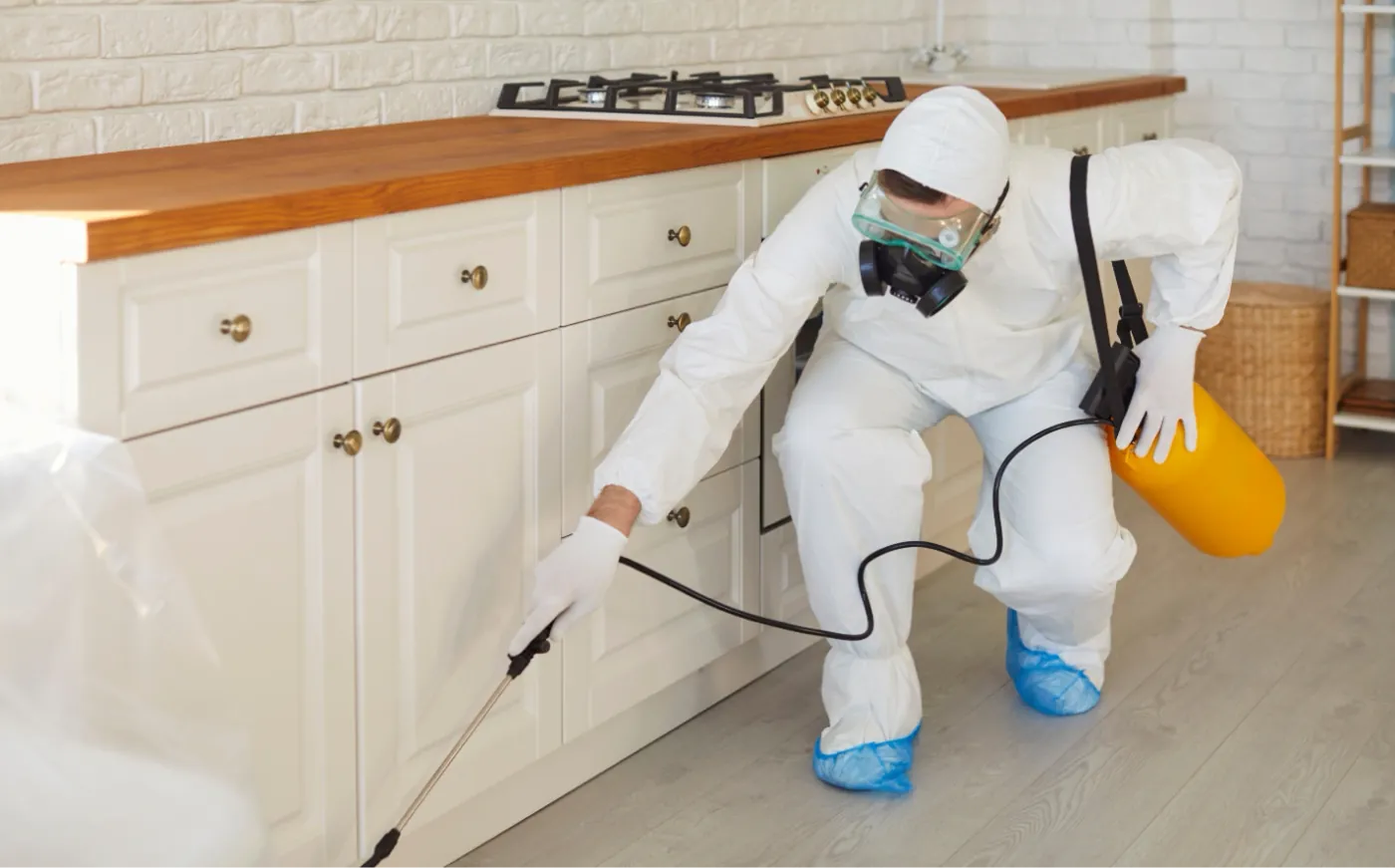

A pest control operation owns two very different kinds of property, and they need two different kinds of coverage. There is the fixed base — the shop or office you run from, and the stored chemical and pesticide inventory you hold between routes. And there is the gear that never sits still — the mounted sprayers, the tank rigs, the fumigation equipment, the termite gear, and the tools that ride your trucks from one account to the next, all day, every day. A single policy line does not protect both halves the same way.
That split is the whole point of this page. Commercial property is tied to an address and largely stops at the property line; it protects the shop and what is stored in it. Contractors equipment — a form of inland marine — follows the mounted rigs and gear once they leave for the route. Get the two confused, and you either pay twice for the same thing or leave a real gap between them — a gap that bites hardest for an operation whose most valuable working gear spends its day on a truck, in a parking lot, or sitting at an account.
What commercial property covers
The property half protects your fixed location and what stays there. Generally that means your building, when you own it; your business personal property — office equipment, shop fixtures, and, importantly for this trade, the stored chemical and pesticide inventory you keep on hand between routes; and, for tenants, the improvements and betterments you built into a leased space, including any storage or containment you added for the product. Many policies can add business income and extra expense, which replaces lost earnings and funds a temporary relocation if a covered loss shuts your location down.
The stored inventory is the wrinkle a generic office does not have. A stockroom of concentrated product represents real value sitting in one place, and how it is stored — segregation, ventilation, containment, and security — shapes both the pricing and the loss-control conditions an underwriter attaches to the policy. The property form responds to the inventory as property: its loss to fire, theft, or a covered weather event. It does not respond to a chemical release into the environment — that is a different exposure entirely, handled by pollution liability. Standard property forms also typically exclude flood and earthquake, which are written as separate placements.
Contractors equipment and inland marine
The equipment half is the part a fixed-address property policy was never built to cover, and for a pest control operation it is often where the most valuable working gear lives. Contractors equipment — inland marine — covers your owned movable equipment against sudden, accidental physical loss: theft, fire, vandalism, and damage in transit, whether the gear is in the shop, on the truck, or sitting at an account. For this trade that means the truck-mounted sprayers and tank rigs, the fumigation gear, the termite and wood-destroying-organism equipment, and the bins of hand tools and applicators a crew draws from.
It is usually arranged in two layers: scheduled coverage that lists higher-value items individually — the mounted rigs, the fumigation equipment, the specialized termite gear — each with its own limit, and blanket coverage that sets a single limit for the pool of smaller sprayers and tools. The reason this matters is geographic: a commercial property policy stops at your shop, but your sprayers and rigs spend the working day everywhere except the shop. Inland marine is the coverage that follows them — in transit between accounts, and parked at the job site or in the lot where theft is the everyday exposure.
How it works specifically for pest control
Picture how a typical day actually runs, because that is what the coverage has to map to. The fixed base — the shop, the office, the stored product — sits at one address and is covered by the property half. Your techs load out in the morning, and the moment the mounted sprayer, the tank rig, the fumigation gear, and the tools roll out the gate, the coverage that follows them is the equipment half. They make daily stops at accounts, leave gear on a truck at a lunch stop, set up a fumigation rig at a building, and run termite equipment at a treatment site — and at every one of those points the gear is away from the shop and exposed in ways a building policy cannot reach.
That is why the two halves are written together for this trade rather than assumed to be one thing. Whether you run a General Pest Control route working from a modest shop, a Fumigation operation with specialized tenting and gas gear, or a Termite & WDO outfit running soil-treatment and baiting equipment, the diagram below maps what the property half covers at the shop and where coverage hands off to inland marine on the route.
Common claim categories
These are the categories underwriters expect on a pest-control property and equipment file, described qualitatively and with generic carrier language — every claim is handled by the carrier, never named here, and no severity figures are stated.
- Fire or theft at the shop. A shop or storage fire damaging the building, office equipment, and stored chemical inventory — or a break-in that takes product and contents from the location.
- Equipment stolen from a truck or job site. A mounted sprayer, a tank rig, fumigation gear, or termite equipment taken off a truck overnight, from a lot, or at an account — the everyday inland-marine exposure for gear that lives on the route.
- Gear damaged in transit. A road incident, a shifted load, or equipment dropped or struck while moving between accounts — loss to the equipment itself, covered by the inland-marine half.
- Weather or water damage on premises. Wind, hail, or a burst pipe damaging the building, fixtures, and stored inventory at the fixed location.
Limits and structure
This coverage is built as two coordinated halves. The property side is structured around a building limit, when owned, a business personal property limit for your contents and stored inventory, optional business income coverage, deductibles, and — on many forms — a coinsurance condition that expects you to insure to an adequate percentage of value. The equipment side is structured around a schedule of higher-value movable items, each carrying its own limit, a blanket limit for smaller sprayers and tools, deductibles set per loss, and any security conditions the form attaches to theft from a truck or unattended site. The drivers are what you own and store, how secured your shop and storage are, and how and where your gear travels. Rather than publish a figure, we set both limits to your actual building, inventory, and equipment values, address flood and earthquake separately where your location calls for it, and confirm any theft-security conditions so a claim is not denied on a condition you never knew about.
Why Pest Control Guard Insurance
We write one trade — commercial pest control contractors — and we know a pest control operation is not a generic office with a truck. We rate a chemical stockroom for what it is, set the contents limit to the inventory you actually carry, schedule the mounted rigs and gear as the high-value movable property they are rather than assume they sit on a building policy, and flag flood exposure plainly when your location has it. We make sure the property half, the equipment half, and your commercial auto coverage meet cleanly so nothing on the route falls between them. We place this coverage with carriers that want the pest-control class. Start with a quote, or call and walk us through your shop, your storage, and what rides your trucks.
Learn more
Property and equipment coverage sits inside a system built for the way pest control crews operate. It hands off to commercial auto for the trucks and trailers that carry the gear, sits alongside general liability for third-party injury and damage from your work, and is separate from pollution liability, which answers for a chemical release rather than the loss of the equipment itself. How big a footprint you insure depends on the work — compare a General Pest Control route, a Fumigation operation, and a Termite & WDO outfit.
Coverage for pest control contractors
- General Liability Insurance
- Commercial Auto Insurance
- Workers Compensation Insurance
- Pollution Liability Insurance
- Professional Liability Insurance
- Umbrella Liability Insurance
Insurance by pest control operation
Coverage Explained
- Are Sprayers Covered If Stolen From the Service Truck?
- Are Stored Pesticides Covered If a Shop Fire Destroys Them?
Get covered
Primary sources
Frequently asked questions about Commercial Property & Equipment Insurance
What does commercial property insurance cover for a pest control operation?
It covers the fixed location your business runs from and the property kept there — the building, if you own it, and the business personal property inside and around it: office equipment, shop fixtures, and the stored chemical and pesticide inventory you hold between routes. If you lease your space, it covers your contents and the improvements you built into it. The unifying idea is that commercial property protects what stays put at an address against perils like fire, smoke, theft, and many forms of weather damage. What moves on your trucks is covered differently, under the equipment half of this page.
How is commercial property different from contractors equipment coverage?
It comes down to whether the property stays put or travels. Commercial property covers what lives at your fixed location — the building, the office, the shop, and the stored chemical inventory. Contractors equipment, a form of inland marine, covers the mounted sprayers, the truck-mounted tanks and rigs, the fumigation gear, the termite equipment, and the hand tools that ride your trucks from account to account. A property policy is tied to an address and largely stops at the property line, so the two are built to work together: property for the base, equipment for everything that leaves it on the route.
Is my stored chemical and pesticide inventory covered by a property policy?
While it sits at your shop or storage room, the stored chemical and pesticide inventory is business personal property at your fixed location, and a commercial property policy is generally built to respond to fire, theft, and many weather perils there. How the inventory is stored matters to an underwriter — segregation, ventilation, containment, and security all factor in — and the policy form should be read against how you actually keep the product on hand. We set the contents limit to the inventory you carry so a stockroom loss is not underinsured. Note that this is the property loss of the inventory itself, not a chemical release into the environment, which is the province of pollution liability.
Is my truck-mounted sprayer or rig covered if it is stolen from the truck?
That is one of the core reasons pest control operators carry the equipment half of this coverage. A mounted sprayer, a tank rig, fumigation gear, or termite equipment taken from a truck overnight, from a parking lot, or off a job site is exactly what contractors equipment inland marine is built to respond to, subject to the policy terms and any security conditions. A fixed-address commercial property policy does not follow the gear once it leaves your shop, which is why the mobile equipment is scheduled separately. We walk through how the form treats theft from a truck before you bind so there is no surprise in the claim.
Is my gear covered while it is in transit between accounts?
Yes — coverage in transit is central to inland marine, and it is built for crews that move equipment between accounts all day. Whether the sprayers, tanks, and tools are mounted on the truck or riding in the bed between one account and the next, contractors equipment follows the gear on the route. This is distinct from commercial auto, which covers the truck and trailer themselves but not the specialized equipment they carry, and from commercial property, which stays anchored to your shop. The three lines hand off to one another, and we make sure the equipment is scheduled so nothing falls through the seam on the road.
Does commercial property cover flood or earthquake?
Generally not — and this is a common and expensive surprise. Standard commercial property forms typically exclude flood and earthquake, which are written as separate placements. Flood is most often handled through the National Flood Insurance Program (NFIP) or a private flood policy, and earthquake through a separate endorsement or policy. If your shop or chemical storage sits in a flood-prone area, we will tell you plainly that the building policy does not cover it and arrange the separate coverage rather than leave you to assume the standard form responds.
What if I lease my shop instead of owning the building?
You still need property coverage — just focused differently. Rather than insuring a building you do not own, the policy covers your business personal property (the office equipment, shop fixtures, and stored chemical inventory you keep there) and your tenant improvements and betterments — anything you built into the space, including any storage or containment you added for the product. Many leases also make you responsible for certain damage to the premises. We size the contents and improvements limits to what you actually have on site rather than defaulting to a generic number.
How are the property and equipment limits structured together?
They are built as two coordinated halves. The property side carries a building limit, when owned, and a business personal property limit for your contents and stored inventory. The equipment side is usually arranged as a schedule of higher-value items — the mounted rigs, the fumigation gear, the termite equipment — each with its own limit, plus a blanket limit for the pool of smaller tools and sprayers. The drivers are what you own and store, how secured your shop is, and how your gear travels. Rather than publish a figure, we set both limits to your actual values so the fixed base and the mobile gear are each covered to what it would cost to replace.
Protect the shop you run from and the gear that rides your trucks
Tell us about your location, what you store, and what rolls out on the route, and we will market it to carriers that write the pest-control class.