
Starting a pest control business is less about one big decision and more about getting a sequence right — entity, license, insurance, equipment, people, accounts — where each step rests on the one before it. This is general education, not legal, tax, or financial advice; confirm the specifics for your situation with your own attorney, CPA, and your state’s licensing agency before you commit money or sign anything. What this roadmap does is put the steps in the order that keeps you from doubling back, and point to the deeper guides for the steps that deserve their own conversation.
The mistake new operators make is sequencing by excitement rather than dependency — buying a wrapped truck and ordering product before the entity exists or the applicator exam is passed. The trade rewards the opposite order, because licensing depends on the entity, insurance and bonding depend on the licensing, and the first account depends on all of it being real. Walk the steps in order and the launch holds together; jump ahead and you spend the first year unwinding gaps.
Step 1 — Choose and register your entity
Everything else hangs off the legal entity, so it comes first. The practical choice for most new operators is between operating as a sole proprietor and forming an LLC, with an S-corp election a consideration as the business grows — a decision that turns on liability exposure, taxes, licensing, and whether you intend to grow or eventually sell. This is squarely an attorney-and-CPA decision, not a rule of thumb, and our guide on LLC versus sole proprietor for a pest control business lays out the lenses to bring to that conversation. The one thing to carry forward now: the entity is the name your licenses, your bond, and your insurance will all sit in, so choosing it first keeps you from re-papering those later.
Step 2 — Get licensed under your state’s framework
With an entity to license, you move to the credential that lets you legally treat accounts. Pest control licensing stacks in layers — a federal pesticide framework set by the EPA under the law called FIFRA, a state structural pest control or applicator license, individual applicator and technician credentials, a local business license, and category certifications for the work you do — and the specifics vary by state. Our guide on pest control business licenses and certifications walks those layers in full, and our state pages carry the verified per-state licensing detail as a starting orientation, with California and Florida among them. The non-negotiable here is that you confirm the actual requirements with your state’s lead pesticide agency, because a state-specific code or category from another state will not match yours. Do not buy product or book a paying job before this step is real.
Step 3 — Put insurance and any required bond in place
Once you are licensed, the protection layer comes before the first paying job — not after. Many commercial accounts, property leases, and even license or bond requirements expect proof of insurance before you can work, and the chemical nature of pest control makes coverage core rather than optional. The specific lines an operation carries, and what they cost, are their own subject — our coverage overview walks what a pest control program is built from, and a quote is where you size it to how your operation actually runs. Alongside insurance, many states require a pesticide or applicator surety bond tied to your license; a bond is a separate thing from insurance, and our guide on whether pest control businesses need a surety bond explains the distinction. Sequence both into the launch here, so the first account is served by a fully covered, properly bonded operation.
Step 4 — Equip the trucks
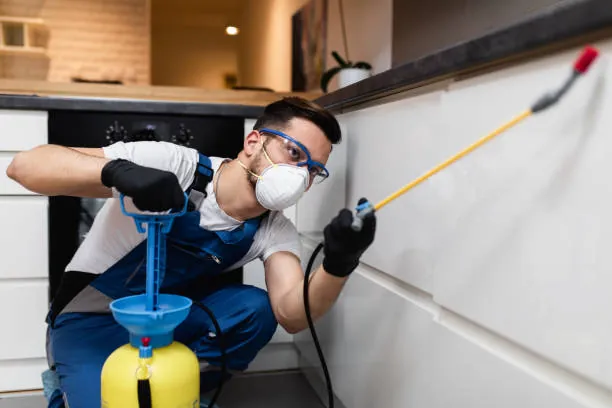
Now the operation gets physical. A pest control business runs on equipment and vehicles — sprayers, bait and monitoring gear, protective equipment, the chemicals themselves, and the service trucks that carry all of it from account to account. The decisions at this step are buy-versus-lease, new-versus-used, and how much capacity to build before the route volume justifies it, all of which shape your startup capital. Two practical notes for a new operator: the trucks and the chemicals they carry become exposures the moment they hit the road, which is part of why the insurance step comes first, and starting lean — one well-equipped truck servicing a tight route — usually beats over-buying capacity the early book cannot fill.
There is also a storage and handling dimension that founders underestimate. The products you carry have to be stored, transported, and disposed of according to their labels and your state’s rules, which can mean a dedicated storage area, spill containment, and record-keeping from the first day you hold inventory. Building that discipline in early is cheaper than retrofitting it after a regulator visit or a spill, and it is part of what a buyer or a carrier later reads as a well-run operation. Equip the trucks for the work you are actually licensed and insured to do, keep the chemical handling clean and documented, and let equipment scale with the route count rather than ahead of it.
Step 5 — Hire and credential the first technicians
When the work outgrows the founder, the first technicians come on — and in this trade hiring is inseparable from licensing. The people applying pesticides generally need their own applicator or technician credentials in the categories of work they perform, so a new hire is not productive on a route until they are credentialed for it, and the timeline to certify them is part of the hiring plan. Beyond credentials, this is where you start building the operation a buyer would later pay more for: trained technicians running documented routes are what make a business transferable rather than owner-dependent. Hire for the work you have, credential before you deploy, and document how the routes run from the first hire.
Real-World Scenario: A founder passes the applicator exam, forms an LLC, and lines up a strong first commercial account that needs service to start in two weeks. The account’s property manager asks for a certificate of insurance before the first treatment — and the founder, having skipped the insurance step to move fast, has nothing to send. The job slips while coverage is put in place, and the relationship starts on a missed start date. Sequencing insurance ahead of the first account, not after it, is the difference between booking the work and losing it on a paperwork gap.
Step 6 — Win the first accounts
The last step is the one founders are most eager for and the one that pays off most when the earlier steps are solid: winning accounts. Most new operations build the first book from a mix of recurring residential routes and a few commercial accounts, won through local visibility, referrals, and service reliable enough to turn one-time jobs into recurring agreements. The strategic point — and the bridge to the rest of an owner’s journey — is that recurring contract revenue is worth far more than one-time work when you eventually sell, a theme our guide on what a pest control business is worth develops, and our guide on buying a pest control business reads from the other side. Build toward documented recurring accounts from the start, win only the work you can service well, and let the book grow on reliability rather than promises.
Starting a pest control business is a sequence, not a leap — and the order is the whole lesson, because each step depends on the one before it. Use the deeper guides for the steps that earn their own conversation, lean on your state pages for licensing orientation, and treat insurance and bonding as launch steps rather than afterthoughts. Most of all, confirm the specifics for your situation with your own attorney, CPA, and your state’s licensing agency before you commit — this is general education to get the sequence right, not advice on your particular launch. Federal planning resources from the SBA are a fine starting point for the business-plan side; the authoritative word on your licensing and entity belongs to your state agency and your own advisors.