
There is no published price for pest control insurance in Colorado, and any number you see quoted before an underwriter has looked at your operation is a guess. What a carrier actually does is build the cost from your specific business — your payroll, the work you do, the chemicals you handle, your fleet, your record, and the coverage you carry. This guide walks the drivers that decide what you pay.
That answer frustrates people who just want a number, but it is the honest one, and understanding the drivers is far more useful than a fake average. A two-truck prevention route running quarterly general-pest and rodent stops across the Front Range and an operation issuing WDO reports and treating soil on home sales in metro Denver are the same trade only in name — and a carrier prices them nothing alike. Below is what moves the number, in roughly the order it matters, and what you can do about each.
Why there is no published price for Colorado pest control insurance
A premium is the output of an underwriting model, not a sticker. The carrier takes your specific exposures — how many people you employ and what they do, the chemicals and methods your work involves, what your trucks and equipment are worth, what your loss history looks like, and the limits your accounts require — and prices each line against them. Change any input and the number moves. That is why a real quote requires real details, and why the most valuable thing you can do is understand which inputs carry the most weight. The rest of this guide is those inputs.
Colorado makes a statewide “average” misleading because the operation, not the geography, decides the number. The spread between a light seasonal prevention route in the high country and a year-round Front Range operation running heavy rodent routes and WDO inspections is wide, because the chemical hazard, the equipment, and the inspection exposure all swing. A blended Colorado number bundles operations a carrier would never price the same way, which is exactly why a published figure tells you almost nothing about your own.
For the full Colorado market picture — the applicator-licensing framework administered by the Colorado Department of Agriculture, Pesticide Program, the state’s pest pressure, and the major metros we place across — see our Colorado pest control contractor insurance page. This guide is the companion to it: that page is the market and licensing overview, this one is the cost explainer. For the trade-wide view of every input, start with the national cost-driver guide.
Payroll and your applicator and technician classifications
Payroll is usually the single biggest driver, because it scales both your workers compensation and a large part of your general liability. It is not just the dollar figure — it is which work the payroll covers. A certified commercial applicator running soil treatments is a different classification than a technician running a quarterly prevention route, and a carrier rates each by what it actually does. The injury profile a carrier is pricing is real for a Colorado pest control crew: chemical handling and exposure, ladders, crawlspaces and attics, winter driving on Front Range and mountain roads, and a lot of route mileage. Colorado places workers compensation with a private carrier rather than a state fund, so rating your crew accurately to the work they perform is where this driver is won or lost.
Your service mix: general pest, fumigation, and termite and WDO
Your operating model may be the most underappreciated driver of all. A general pest control operation runs recurring routes — extermination, prevention, rodent, and overwintering-pest work — so its cost concentrates in general liability, applicator pollution, commercial auto, and workers compensation across a fleet that is always moving. A fumigation operation works with gas fumigants where that service line applies, pushing the pollution and general liability weight up. A termite and WDO operation adds a professional liability exposure for the inspection reports it issues, on top of soil-treatment and equipment considerations. Writing all three off one generic pest control rate overcharges one side and underprotects another. If you run several models, the operation should be split by classification so each side is priced to its own exposure.
The chemicals you handle and the pollution exposure
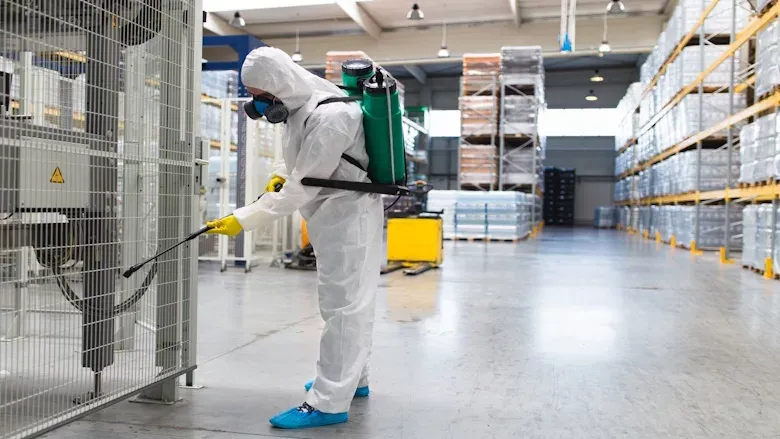
For a pest control operator, the pesticide is the work — which is why the chemical you handle is a signature cost driver. A standard general liability policy excludes pollution, so a misapplied or drifting chemical, an overspray onto a neighboring property, a chemical-exposure claim from an occupant or bystander, or an environmental cleanup falls outside it. That gap is what applicator pollution liability is written to answer, and even in a more seasonal application state like Colorado — where commercial applicators are certified under the federal EPA pesticide applicator certification framework — a carrier treats it as core rather than as an optional add-on. How you mix, apply, transport, and store chemical — and whether your procedures are disciplined and documented — is a real input a carrier reads when it prices the pollution line, not a footnote.
Real-World Scenario: A Front Range operator is running heavy fall rodent and overwintering-pest routes across the Denver suburbs while a crew treats a soil perimeter on a pending home sale and a third truck handles a commercial account as the first hard freeze pushes pests indoors. The chemical on the trucks, the occupants and neighbors at each stop, the WDO report due on the sale, and the winter road conditions are several different exposures, all live at once. None of it is a surcharge a carrier applies blindly; it is the specific picture they price. The operator who can describe that picture clearly gets a sharper quote than the one who cannot.
Your vehicles, equipment, and where they are stored
The trucks, vans, and rigs a Colorado pest control operation drives between accounts are a direct commercial auto cost, and an operation crossing the sprawling Denver metro or running long routes from Fort Collins to Pueblo every day carries more of it than one working a tight service area — and winter driving adds to that exposure. Equipment and stored chemical run alongside it: mounted tanks, sprayers, and termite rigs are valuable and frequently ride the trucks or sit at a shop, which is what commercial property and equipment coverage responds to. Where you keep your rigs and chemical inventory overnight, and how it is secured, is a real input — both a theft question and a chemical-handling one.
The inspection and WDO exposure that drives professional liability
Colorado’s growing Front Range sustains a busy real-estate market, and an operation that issues termite or wood-destroying-organism reports carries an exposure that has nothing to do with bodily injury or property damage. If a report a buyer or lender relied on missed active infestation or damage, the resulting claim is a financial loss — an errors and omissions exposure that general liability does not reach. Termite pressure is lighter here than in the South, but for an inspect-and-treat operation professional liability is still a signature line, and how much inspection work you do is something a carrier weighs directly. It is one of the clearest examples of why two operations of the same size can price differently: the one issuing reports carries an exposure the prevention-only route does not.
Claims history and how carriers read it
Your loss record is a driver you have already been writing for years. A clean history opens more markets and prices better; a serious pollution, general liability, or workers compensation loss in the last several years narrows the field and raises the number, and a frequency pattern of small claims can matter as much as one large one. Carriers read the story behind the losses too — a single claim with corrected mixing or application procedures reads differently than repeated, similar incidents. The durable lever here is operational discipline: documented application and chemical-storage procedures, technician training, and worker-safety practices under OSHA standards and the federal EPA pesticide framework all show up in the record a carrier prices.
The coverage choices that move your premium
Finally, what you buy is a driver. The limits your commercial accounts and larger contracts require — for property managers, general contractors, and commercial clients — push you toward an umbrella, and higher limits cost more than lower ones. Whether you carry applicator pollution and professional liability at the limits your work actually calls for, whether you schedule your rigs and equipment to value, and how your property limits are set all feed the number. None of these are places to under-buy blindly — they are places to buy deliberately, which is the difference between a cheap policy and the right one.
How to get an accurate Colorado quote
The path to a real number is to describe your real operation. Tell a broker your payroll and the work it covers, your mix of general pest, fumigation, and termite and WDO work, your chemical handling and storage, your vehicle and equipment list, your claims history, the limits your accounts require, and where in Colorado you operate. From there a carrier with genuine pest control appetite can price it — and you can compare apples to apples instead of chasing a headline rate. It can also help to see how neighboring mountain-west markets read: compare the Utah cost guide, the New Mexico cost guide, and the Wyoming cost guide. You can also confirm the state framework directly through the Colorado Department of Agriculture, Pesticide Program. When you are ready, start a quote and tell us how your operation runs, or browse the full coverage overview to see how each line fits together. The number at the end will reflect your business, which is the only number worth having.