
Usually contractors equipment — not your auto policy, not your building policy. When sprayers, tank rigs, or tools are stolen out of your truck, the line built to respond is the inland-marine half of your combined commercial property and equipment coverage, the part written to follow your gear off the shop and onto the route. This guide walks why the theft lands there, why the two policies sitting right next to it do not answer, and how to set it up so a claim pays.
The reason this trips up operators is that a truck full of stolen gear feels like it should be an auto claim, or a property claim, because those are the policies they think of first. It is neither. Below is the narrow question answered in full, with the broader property-versus-equipment split left to the page it belongs on.
The short answer: usually inland-marine contractors equipment
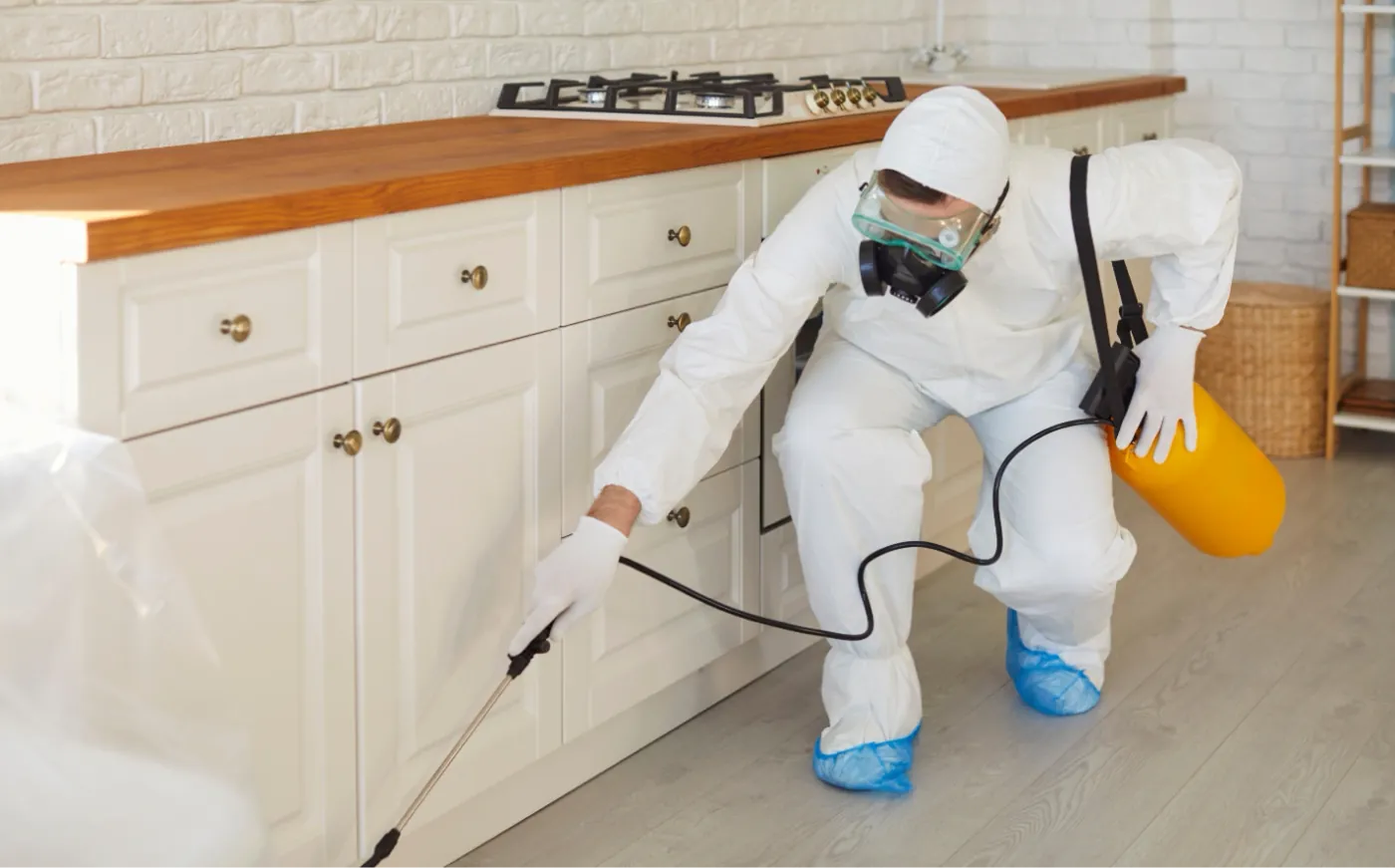
A mounted sprayer pried off a truck overnight, a tank rig taken from a parking lot, a bin of tools lifted at a job site — that is theft of your owned movable equipment, and that is exactly what contractors equipment inland marine is written to answer. It is the equipment half of your commercial property and equipment coverage, and it covers the sprayers, rigs, fumigation gear, termite equipment, and tools against sudden loss including theft, whether the gear is in the shop, on the truck, or sitting at an account. The policy responds to the loss of the equipment up to its scheduled or blanket limit, subject to your deductible and the form’s conditions. The honest qualifier is twofold: the stolen gear has to be scheduled or covered under that equipment line in the first place, and any theft-security conditions in the form have to be met. Get both right and the line does its job. The mistake to avoid is assuming the truck’s own policy or the shop’s policy reaches the gear — neither was built to.
The trap: it feels like an auto or a building claim
Here is where operators land on the wrong policy. The gear was stolen off a truck, so the instinct is to call the auto carrier — but commercial auto covers the operation of the vehicle: the truck and trailer themselves, the liability, the physical damage to the vehicle. The specialized sprayers, tanks, and tools the truck happens to be carrying are not the vehicle, and the auto form is not built to insure them. Other operators reach for the building policy, because that is “the property insurance” — but a commercial property policy is tied to a fixed address and largely stops at the property line. It covers the shop, the office, and the stored inventory that stays put; it does not follow the rigs once they roll out the gate. The gear that was stolen spends its entire working day everywhere except the shop and is not the vehicle either, which leaves it falling between the two policies operators reach for first. The line written for property that moves — that travels in transit and sits exposed at a lot or job site — is inland marine. Missing that is how a real, covered loss gets reported to two policies that both decline it.
Real-World Scenario: A crew parks a service truck at a motel overnight on a multi-day commercial job out of town. By morning the mounted sprayer and a locked bin of hand tools are gone from the bed. The operator calls the auto carrier first and is told the truck itself was not damaged or taken, so there is nothing for that policy to answer; the gear is not the vehicle. The building policy is no help either, because the loss happened a hundred miles from the shop. The line that responds is the contractors equipment inland marine the operator carries on the equipment half of the property program — the policy written to follow the sprayer and tools off the truck and pay the loss up to their limit, subject to the form’s theft conditions.
What the equipment line covers and what it does not
Contractors equipment inland marine is built to respond to sudden, accidental physical loss of your owned movable gear — theft, fire, vandalism, and damage in transit — whether the equipment is in the shop, on the truck, or sitting at an account. For a pest control operation that is the mounted sprayers and tank rigs, the fumigation gear, the termite and wood-destroying-organism equipment, and the bins of hand tools and applicators a crew draws from. It is usually arranged in two layers: higher-value items scheduled individually, each with its own limit, and a blanket limit covering the pool of smaller sprayers and tools.
What it does not do is reach beyond the equipment itself. It is not the vehicle — that is the auto policy. It is not the building or the stored inventory at your fixed address — that is the property policy. And it is not a chemical-release loss; if a theft or incident leads to product spilling into the environment, that environmental piece is a pollution liability matter, separate from the equipment loss. The equipment line answers for the gear as property, full stop.
What actually responds, and the condition that decides the claim
On a clean theft from a truck, your contractors equipment line responds: the carrier evaluates the loss of the scheduled or blanket-covered gear, pays up to its limit, and applies your deductible. The detail that most often decides whether the claim pays in full is the form’s theft-security conditions. Inland-marine forms can require that the truck be locked, that gear be secured, or that equipment not be left unattended in certain ways overnight or at a job site — and if a condition is not met, a theft claim can be reduced or denied even though the loss is the type the policy covers. This is the single most important thing to read before binding, because it is a condition you can plan your crews’ routine around if you know it, and a denial waiting to happen if you do not. The full property-versus-equipment picture, including how the schedule and blanket layers are built, lives on the commercial property and equipment page; the point for the theft question is narrow: this is the line that answers, on the conditions the form sets.
A practical check before the gear leaves the shop
Set this up before a theft tests it. Schedule your high-value rigs and fumigation gear individually so each is insured to what it would actually cost to replace rather than capped under a generic blanket figure, set a blanket limit for the smaller sprayers and tools, and confirm both are sized to real replacement values. Read the theft-security conditions in the form and make sure they are ones your crews can realistically meet on the route — locking habits, overnight storage, how gear is left at a job site. Then confirm the three lines meet cleanly: the equipment line, your commercial auto, and your commercial property should hand off to one another so nothing on the route falls between them. A broker who knows the pest control trade should map what rides your trucks before the policy binds. If your crews work more than one state, the way coverage tracks the route across state lines is worth confirming too — the same multi-state attention the workers compensation program needs. The operational standard your gear runs under matters to the file as well: secure transport and storage of the product on those rigs falls under the EPA pesticide program and applicator standards under the EPA certification framework, and the workplace-safety side under OSHA — a clean record there supports both your underwriting and your loss-control conditions.
Before it happens, insure the gear that moves
The sprayers and rigs that earn your money spend their day exactly where your building policy cannot reach and your auto policy is not aimed — on the truck, in transit, and parked exposed at a lot or job site. Carry contractors equipment inland marine on the equipment half of your commercial property and equipment coverage, schedule the high-value gear to replacement value, meet the theft-security conditions, and make sure it meets your commercial auto cleanly. If you are sorting out which policy covers the truck and the driving rather than the gear, the companion reads are do I need commercial auto for pest control trucks and, for the stored inventory back at the shop, insurance for stored pesticides and chemicals in a fire. What a program costs depends on what you own and how it travels — see the cost drivers behind it, and how it fits a general pest control operation. When you are ready, start a quote and tell us what rides your trucks.