States we serve · Idaho
Idaho pest control contractor insurance
Fast Treasure Valley growth drives general-pest and rodent demand in a drier, seasonal, lighter-termite market. We write the applicator pollution, professional liability, general liability, property and equipment, commercial auto, and workers compensation that Idaho general pest, fumigation, and termite operations actually need.

Idaho pest control operations run a year of routes, treatments, and inspections, and a policy rated to a generic Idaho contractor misses what actually decides a pest control operator’s claims: the chemical that drifts onto a neighboring property, the missed termite letter on a home sale, the tech exposed to product all day, and the trucks and equipment that run the routes. This page walks the cost drivers, the Idaho licensing picture, the state’s pest pressure, the exposure scenarios, and the major Idaho markets — and links the coverage and service detail throughout.
What Idaho Pest Control Insurance Costs
There is no single Idaho price, and any number quoted before an underwriter sees your operation is a guess. The structure of an Idaho program starts with the professional applicator’s license. The statute requires the applicator to show proof of financial responsibility as prescribed by rule, and if a licensed professional applicator fails to maintain it the license is automatically suspended until the Department receives verification of compliance (Idaho Code Title 22, ch. 34). By rule the proof can be liability insurance with an insurance company licensed to do business in Idaho and documented on a form the Director approves, or one of the other instruments the rule lists, such as an approved bond; the minimums are bodily injury of $50,000 per person and $100,000 per occurrence, property damage of $50,000 per occurrence, and a maximum deductible of $5,000, and any exclusion must be listed on a form the Director approves (IDAPA 02.03.03). Those are required minimums, not a view of what an account or the work needs. Workers compensation is separate: every employer must secure payment of compensation in one of the ways the statute lists (Idaho Code Title 72, ch. 3). What an underwriter prices on top of that is your payroll and technician classifications, your mix of general pest control, fumigation, and termite and WDO work, the size of your fleet, the limits your commercial accounts demand, and your claims history. We rate each operation to its real exposure rather than off one generic contractor class. For how those drivers play out and what actually moves the number, see our Idaho pest control insurance cost guide.
Idaho Pest Control Licensing & Regulation
Pest control is a licensed trade in Idaho, and getting the licensing right is the foundation an underwriter and a commercial account both expect.
State pest control licensing
Idaho licenses the individual: anyone acting as a professional applicator needs a professional applicator’s license from the state agriculture department, earned by examination. Its pesticide statute separately licenses pesticide dealers, who sell pesticides rather than apply them. The licensing authority is the Idaho State Department of Agriculture, Pesticide Program. The practical takeaway: in Idaho the license belongs to the person acting as the professional applicator, so a pest control company looks at who holds one for each job — and a commercial account or larger contract will layer its own insurance and certificate requirements on top of that, which we confirm before you mobilize.
State insurance regulator & worker safety
Insurance in Idaho is overseen by the Idaho Department of Insurance (DOI), which regulates the admitted carriers your program is placed with. On the job, pesticide use runs through the federal EPA FIFRA framework, while worker safety — chemical handling, respiratory protection, and confined-space work in crawlspaces and attics — runs through OSHA standards, all of which underwriters read as part of your risk control.
Idaho Pest Pressure & Market
A drier, cooler climate keeps termite pressure low relative to the South and the general-pest calendar seasonal, with rodent and occasional-invader work across growing metros.
The honest framing: pest pressure in Idaho is not uniform across the state, and the service mix shifts with climate, housing stock, and the local calendar. Cold winters concentrate field work in the warm months; rapid growth around Boise drives general-pest demand. That spread is why we weight each operation’s coverage to where and how it actually works rather than to a statewide average.
Common Idaho Pest Control Risks
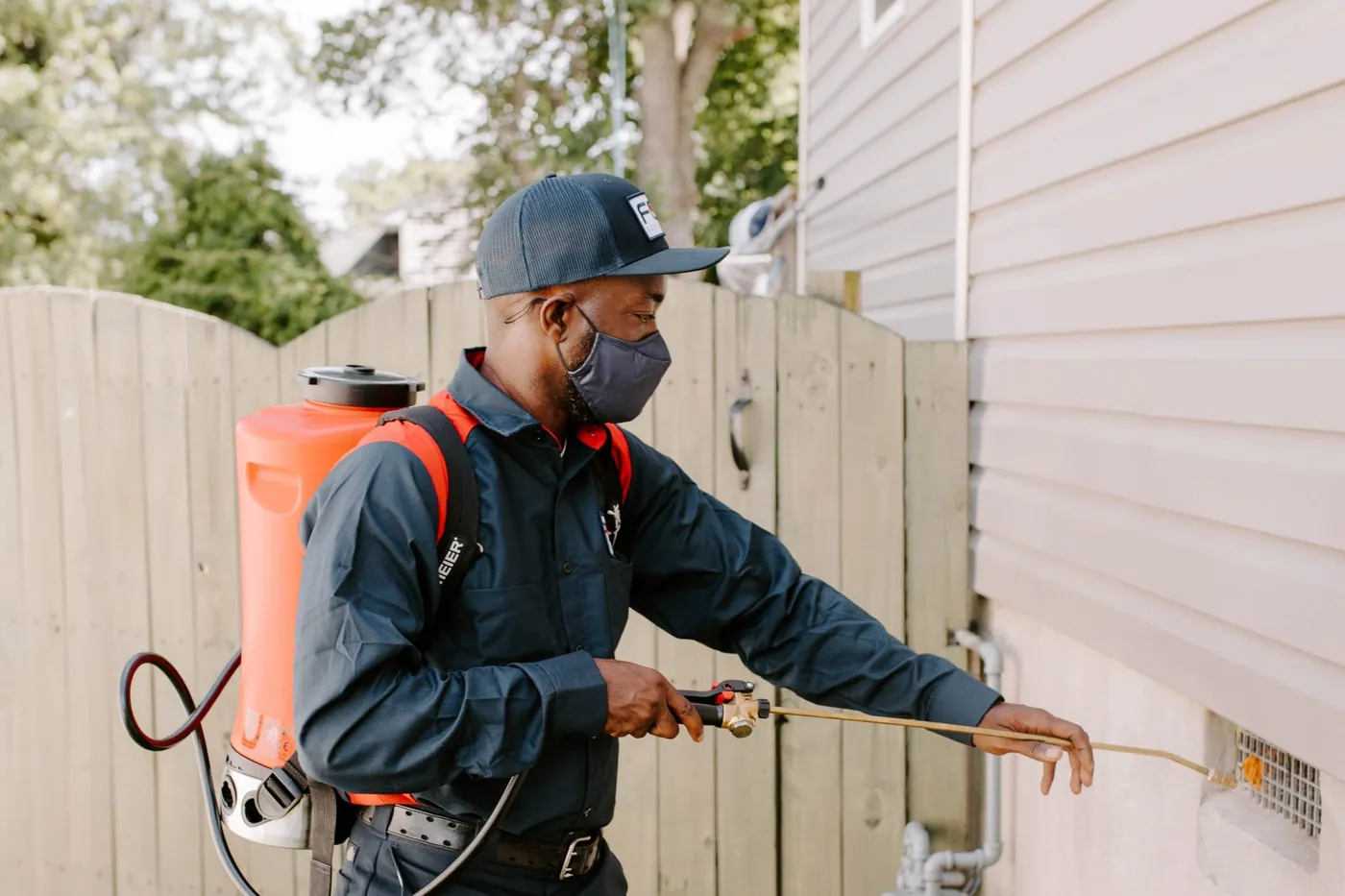
Idaho layers the trade’s own hazards onto its local season and market. The diagram below maps the operating risks an Idaho pest control operator carries to the coverage lines that respond — the misapplied or drifting chemical to applicator pollution liability, the missed termite or WDO inspection to professional liability, the slip or property damage on a service call to general liability, the techs and trucks on the routes to workers compensation and commercial auto, and the rigs and stored chemical to commercial property and equipment.
Common Idaho Pest Control Claim Scenarios
These are exposure scenarios, not claims data: each ties a way a loss could arise to something Idaho’s rules make specific. Carriers are never named here.
- A license suspended over a lapsed policy. If a licensed professional applicator fails to maintain the required financial responsibility, the license is automatically suspended until the Department receives verification of compliance (Idaho Code Title 22, ch. 34), and the applicator must notify the Department in writing immediately after cancellation or reduction of the coverage below the minimums (IDAPA 02.03.03). A cancellation or non-renewal mid-term stops the applicator from working as well as leaving a coverage gap.
- An exclusion on the policy that meets the minimum. Any exclusion to the liability insurance must be listed on a form the Director approves (IDAPA 02.03.03). A policy can meet the license minimums and still exclude the pesticide release a customer later alleges — an applicator pollution exposure.
- A negligent application. The statute prohibits applying pesticides in a faulty, careless, or negligent manner (Idaho Code Title 22, ch. 34). A drift or misapplication allegation is a bodily injury, property damage and pollution question as well as a licensing one.
- An application record that cannot be produced. Professional applicators must maintain pesticide application records for two years, ready to be inspected or submitted when the Director requests them (IDAPA 02.03.03). After a neighbor alleges drift, the record is what shows what was applied where, and a gap in it makes the general liability defense harder.
- A technician hurt on a route. Every employer must secure the payment of compensation in one of the ways the statute lists (Idaho Code Title 72, ch. 3). A technician hurt handling product or on a ladder is a workers compensation event.
How Coverage Is Placed for Idaho Pest Control Contractors
Idaho licenses the professional applicator, and the financial responsibility requirement attaches to that license rather than to a separate business license (Idaho Code Title 22, ch. 34). In placing an Idaho program we start from the rule: the policy written by an insurer licensed in Idaho, the Director-approved form that documents it, the listed exclusions, and the prompt written notice the applicator owes the Department when coverage is cancelled or reduced (IDAPA 02.03.03). The license categories the applicators hold, such as industrial, institutional and structural pest control, decide the rest. Insurance itself is overseen by the Idaho Department of Insurance (DOI). When an Idaho property manager or commercial account sends over insurance requirements you do not recognize, that is a call we take.
Major Idaho Pest Control Markets
Fast Treasure Valley growth drives general-pest and rodent demand in a drier, seasonal, lighter-termite market.
Pest pressure and service mix shift across Idaho, so we place coverage across the state’s major metro markets — from Boise to Coeur d’Alene — and weight each operation’s program to where its routes and accounts actually are. These are the major Idaho pest control markets we place across:
- Boise
- Meridian
- Nampa
- Idaho Falls
- Pocatello
- Coeur d’Alene
Idaho is one of the 48 states we are licensed in. As each state page comes online you can compare licensing, pest pressure, and market conditions across every state we serve.
Related Reading
Idaho coverage works as a system. Start with the two lines that define the trade — applicator pollution liability and professional liability — then the property and equipment and commercial auto that follow the gear and the trucks. By operating model, see general pest control insurance, fumigation insurance, and termite and WDO insurance. To compare other states, use the states we serve index.
Idaho Pest Control Insurance FAQs
Do pest control contractors need a license in Idaho?
Yes. Idaho licenses the individual: anyone acting as a professional applicator needs a professional applicator’s license from the state agriculture department, earned by examination. Its pesticide statute separately licenses pesticide dealers, who sell pesticides rather than apply them. The authority is the Idaho State Department of Agriculture, Pesticide Program. Licensing is the floor, not the finish line — a commercial account or a larger contract will set its own insurance and certificate requirements on top of it, and we confirm what each one demands before you bid.
Why does an Idaho pest control operation need applicator pollution liability?
Because a standard general liability policy excludes pollution, and for a pest control operator the pesticide is the work. A misapplied or drifting chemical, an overspray onto a neighboring property, or a chemical-exposure claim falls outside general liability. Applicator pollution liability is the line written to respond to exactly those events, which is why we treat it as core for an Idaho operation rather than an optional add-on. The pollution liability page explains the mechanism in full.
Does insurance cover a missed termite or WDO inspection on an Idaho home sale?
That is a professional liability — errors and omissions — exposure, not a general liability one. The WDO or termite report you issue is something a buyer or lender relies on. If active infestation or damage was present and the report said otherwise, the resulting claim is a financial loss with no bodily injury or property damage — which general liability does not reach. Professional liability is the line that responds, and it is the signature coverage for an inspection-and-treatment operation.
How does workers comp work for Idaho pest control technicians?
Idaho is not a monopolistic state-fund state, so workers compensation is placed with a private carrier, and most commercial accounts require it regardless of headcount. For a pest control crew the injury profile is real: chemical handling and exposure, heat, ladders, crawlspaces and attics, and route driving. We structure comp around how your techs actually work rather than off a generic contractor class.
What insurance do Idaho pest control contractors need?
Idaho makes proof of financial responsibility a requirement of the professional applicator license, and the license is automatically suspended if the applicator fails to maintain it. Beyond that, a program is built from general liability, commercial property and equipment, commercial auto, and workers compensation, plus pollution or professional liability depending on the work.
How fast can I get a certificate of insurance for an Idaho account?
Once your policy is in force, certificates for an Idaho property manager, commercial account, or general contractor are typically same-day during business hours, including the additional-insured wording the contract requires. Getting the certificate right — correct limits, correct additional-insured status, correct description — is what keeps an account and protects a bid, so we confirm exactly what each contract demands before issuing.
Get an Idaho pest control insurance quote
Tell us how your Idaho operation works — general pest, fumigation, termite, or all three — and we will market it to carriers that write the class.