
Contractors tools and equipment insurance and inland marine insurance are the same thing. One is the name buyers use, the other is the line of business insurers write it on. The coverage exists because pest control equipment spends its working life away from your building — which is precisely where the property policy stops and the auto policy never began.
That two-name problem is worth clearing up first, because operators shop for one term, get quoted the other, and reasonably wonder whether they are comparing like with like. They are. What follows covers what the form actually protects, the two gaps it closes, how the schedule should be built for a pest control operation, and where it stops.
The two names, and why both are correct
Inland marine is a line of business. Contractors tools and equipment is a coverage form written on it. Asking whether you need one or the other is like asking whether you need a vehicle or a truck.
The name is a historical accident that stuck. Marine insurance covered cargo at sea; when insurers extended the same idea to goods travelling overland, the extension took the name inland marine, and it became the natural home for property that moves or lives away from a fixed address. Contractors equipment, property in transit, and goods on a job site all landed there. Nothing about the label describes what it covers today — mobility does.
So if a proposal says inland marine and you asked about tools and equipment, do not read it as a substitution. Read the schedule, the limits, and the covered causes of loss, which is where the actual differences between two quotes live.
Why the property policy does not follow your equipment
A commercial property policy is organised around a described location. It insures the building, if you own it, and the business personal property at that premises. Some forms extend a limited amount to property temporarily off site, and that extension is usually small enough to be beside the point for an operation whose equipment is off site almost continuously.
Think about where your kit actually is on a Tuesday afternoon. The sprayers are on a route. The bait stations are in a customer’s building. The rigs are in the truck bed between stops. The shop holds whatever came back for maintenance. A form built to cover property at your address is covering the smallest part of the picture at any given moment, and it is not an oversight in the policy — it is what the form was designed to do. Closing that gap is the whole job of the equipment form.
Why the auto policy does not cover what the truck is carrying
The second assumption that costs operators money is that equipment in the truck is covered by the truck’s policy.
Commercial auto insures the vehicle and the liability that arises from operating it. Cargo is a separate exposure on a separate form. When a sprayer is taken out of a locked truck bed overnight, the loss feels like an auto event because a vehicle was involved, but the vehicle was not damaged and the auto policy is not the instrument that responds to its contents.
This is the single most common equipment surprise in the trade, and it has a specific answer worth reading in full: whether sprayers are covered when stolen from the service truck walks through exactly which form picks it up. It also pairs with the mirror-image question about the vehicle itself — what happens when product spills from the truck and whether auto responds — because the two look adjacent and are answered by different policies.
What the form actually covers
Tools and equipment coverage responds to physical loss or damage to your covered equipment, wherever it happens to be — at the shop, in transit, on a customer’s property, or in the truck overnight. Theft is the headline peril for this trade, but fire, vandalism, and accidental damage are all live, and equipment does not have to leave your possession to be destroyed.
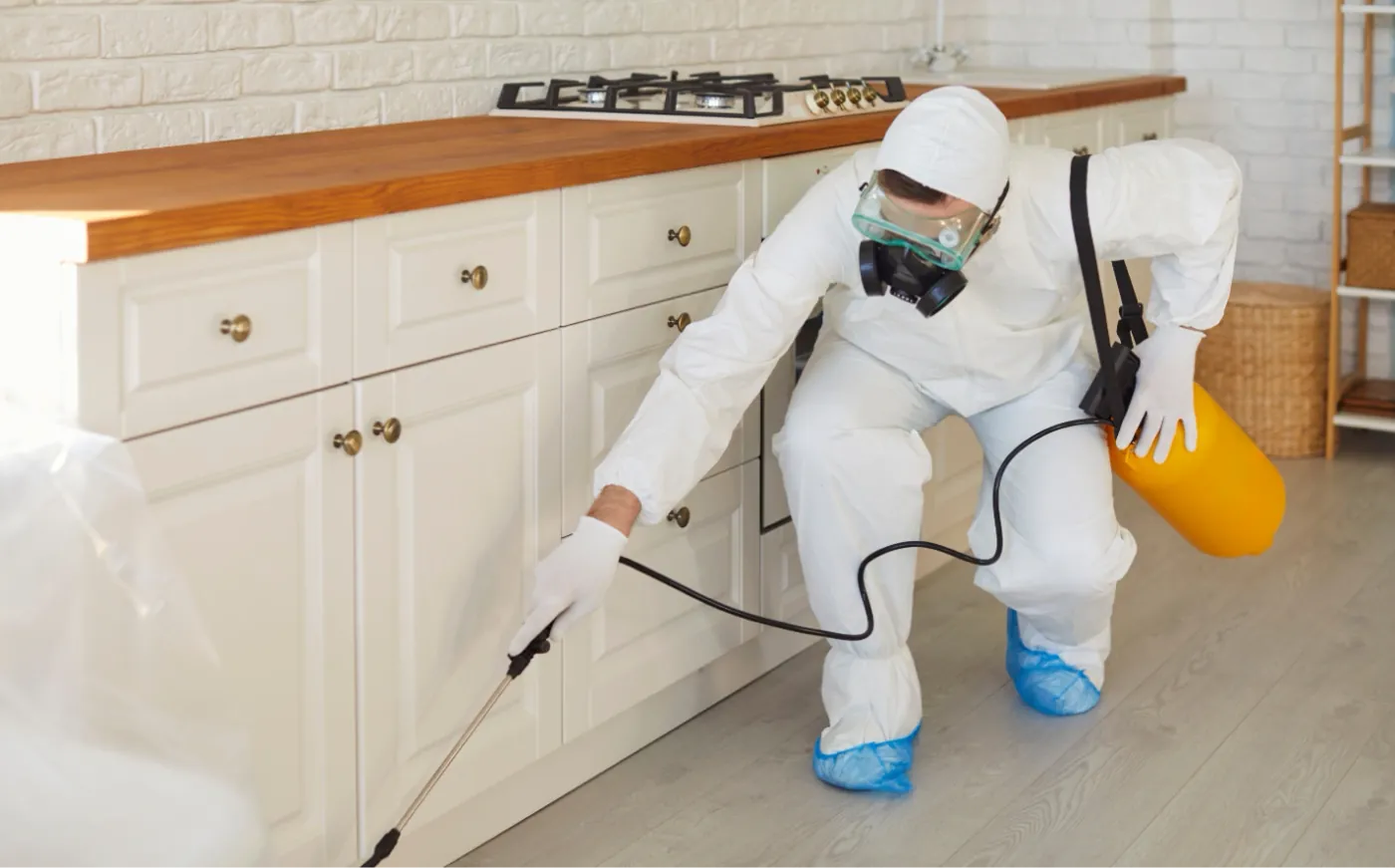
For a pest control operation the schedule typically holds power sprayers and tank rigs, bait station inventory, inspection and detection equipment, fumigation gear including tarps and monitoring instruments, hand tools and application equipment, and any specialised termite or soil-treatment kit. Fumigation and termite and WDO operations tend to carry the highest per-item values, which is exactly where a limit built for general kit falls short.
Scheduled, blanket, and the gap between them
Two structures, and most operations need both.
Scheduled coverage lists specific items with individual limits. It suits high-value rigs, fumigation equipment, and anything with a long replacement lead time. Blanket coverage applies one limit across unscheduled small tools, which suits the long tail of items too numerous to list individually.
The failure mode sits between them. An operation blankets its equipment at a limit sized around hand tools and sprayers, then adds a high-value rig that never gets scheduled — and discovers at claim time that the blanket carries a per-item cap well below what the rig cost. Anything you could not comfortably replace out of operating cash should be on the schedule by name, and the schedule should be revisited when you buy, not at renewal.
Deductibles are worth the same attention. Equipment losses cluster small and frequent rather than rare and catastrophic, so a deductible set high enough to be comfortable on a rig can quietly make the coverage irrelevant for the sprayer thefts that actually happen.
Real-world scenario. An operator running three route trucks blankets the general kit and schedules nothing, on the reasonable view that sprayers and hand tools are what the crew carries. A termite job the following season needs a soil-treatment rig, which gets bought and put straight into rotation. Overnight, a truck is broken into at a hotel lot and the rig goes with the rest of the load. The blanket limit responds to the hand tools without difficulty and then meets its per-item cap on the rig, which was never listed and was worth several multiples of anything else in the truck. Nothing about the policy failed — the schedule simply described the operation as it was two seasons earlier. The fix was administrative and took ten minutes at the next renewal, which is the frustrating part.
What a claim actually asks you for
The part operators are least ready for is documentation, and it is the cheapest thing to fix before you need it.
An equipment claim turns on proving three things: that you owned the item, what it was worth, and that the loss happened the way you say it did. A schedule with model and serial numbers answers the first two before an adjuster has to ask. A police report filed the morning of a theft answers the third far better than a recollection three weeks later. Operators who keep purchase invoices in the same folder as the schedule settle claims in days; operators reconstructing a list from memory settle them in weeks, and usually for less.
Keep the schedule current as a habit rather than an annual chore. Every rig you add mid-season is uninsured on the schedule until somebody says so, and the season you add it is the season you are using it hardest. A photograph of each major item, its serial plate, and the invoice, held somewhere that is not the truck, costs an afternoon once and pays for itself the first time a bed cover gets cut open in a hotel lot overnight.
Where the coverage stops
Three limits worth knowing before you rely on the form.
Property of others in your care is not automatically your property. Rented fumigation equipment, or gear borrowed from another operator, may need to be specifically addressed — and rental contracts routinely make you responsible for it while it is in your custody, which creates an obligation the form may not answer on its own.
Wear, mechanical breakdown, and rust are maintenance, not insured perils. Equipment coverage answers sudden and accidental loss, not the consequences of a pump running past its service life.
And the form covers the equipment, not what the equipment does. If a misapplication damages a customer’s property, that is applicator pollution liability and general liability territory, not an equipment claim. Operators occasionally expect the equipment form to answer for a treatment gone wrong because equipment was involved; it answers for the sprayer, not for the spray. Where the liability layers stack high enough to need it, an umbrella sits above them.
How it fits the rest of the program
Equipment coverage is not a standalone purchase for most operations — it is a line inside a program alongside general liability, pollution, auto, and workers compensation, and it is usually the cheapest line to get wrong because the limits look small next to the liability limits.
Your safety obligations run alongside it. OSHA’s personal protective equipment standard and its respiratory protection requirements govern the gear your crew wears, and OSHA’s motor vehicle safety guidance covers the driving that puts the equipment at risk in the first place. EPA’s occupational pesticide safety materials sit over the handling of what goes into the sprayer, under the FIFRA framework the states administer.
If you run general pest control routes, fumigation work, or both, the equipment schedule should look different in each case, because the values and the theft profile differ. Send us what you actually run and where it sleeps at night, and we will build the schedule around the operation rather than around a template.