
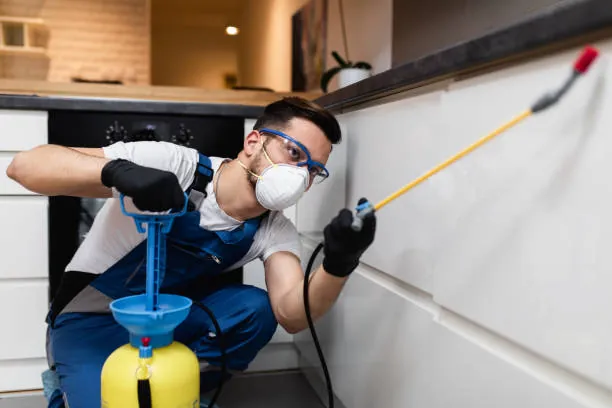
A pest control technician is the person who carries your chemical, your truck keys, and your company name onto a stranger’s property — which makes hiring and training them one of the few decisions that touches your revenue, your reputation, and your liability all at once. You can hire one in an afternoon. You build one over months. This guide walks the path from recruiting through certification, supervised field training, a real safety culture, and the retention that keeps the people you spent that time on.
The owners who do this well are not the ones with the slickest hiring ads — they are the ones who recruit for the right traits, treat certification as a floor rather than a finish line, and supervise new technicians on real accounts before turning them loose. Get that sequence right and your routes run clean, your customers see the same face at the door, and the mistakes that become claims stay rare. Get it wrong and the cost shows up everywhere at once.
Recruit for attitude, screen for the things you cannot coach
The instinct is to hunt for experienced pest control technicians, but experience is the easiest thing on the list to teach and the hardest thing to verify. The traits that actually decide whether a hire works out — reliability, composure at a customer’s door, care around chemicals, comfort with physical outdoor work, and a clean driving record — are mostly things a person either brings or does not. So the strongest operators recruit for attitude and trainability, then build the technical skill themselves.
A few screens protect you before anyone is hired. A realistic job description that describes the route-driving, the seasonal swings, and the physical reality of crawlspaces and ladders filters out the people who will quit in the first month. A driving-record check matters more than owners expect, because a technician spends a large share of the day behind the wheel of your route truck, and the driving record you hire is the driving exposure you carry. Screening for it up front is far cheaper than discovering it through a commercial auto claim later.
The certification path is the floor, not the finish line
Pesticide applicator certification sits at the center of who may legally treat a property. The framework is federal — set by the EPA — and administered by each state’s lead agency, which means the categories, the exams, and the supervision rules vary from state to state. The pattern most states share is that a technician must be either certified themselves or working under the direct supervision of a certified applicator, with restricted-use products carrying stricter requirements. Because the specifics differ everywhere, the practical move is to confirm the current rules with your own state lead agency rather than assume a national standard.
The mistake is treating that certification as the end of training. A certificate proves a technician cleared a regulatory minimum; it does not prove they can read a label under pressure, mix correctly on a hot afternoon, or recognize when a job calls for a different approach. Certification is the floor you are legally required to stand on. The competence customers pay for, and the competence that keeps you out of a loss run, is built in the field after the certificate is in hand.
Onboarding and supervised field training
The stretch between a signed offer and a technician working a route alone is where competence is actually built, and it is the stretch owners most often cut short when they are shorthanded. Resist that. A structured onboarding covers the products you use and their labels, the equipment and how to mix and calibrate it, the route and account procedures, the documentation you expect at each stop, and the safety practices that are not optional. None of that sticks from a classroom alone.
Supervised field training is the part that matters most. A new technician rides with and works under a certified applicator on real accounts — watching first, then doing under supervision, then being checked before they treat a property unsupervised. That apprenticeship is where a technician learns to read a job that does not match the script, handle a customer who is anxious about the chemical, and recognize the conditions that call for stopping rather than spraying. An owner who skips it to fill a route faster is trading a few weeks now for the misapplication, the exposure incident, or the unhappy customer later. The shortcut is the expensive path.
Your first employee changes your insurance picture
There is a moment in onboarding that owners often miss because it is a paperwork event rather than a field one: hiring your first W-2 employee generally triggers a workers’ compensation requirement. The rules are set state by state, and most states require coverage as soon as a business has employees, with thresholds and exemptions that vary, so confirm your own state’s specific rule rather than assume. The point is that the requirement usually arrives with the first hire, not at some later headcount.
For pest control the exposure behind that requirement is real from day one. Technicians work around chemicals, climb ladders, enter crawlspaces and attics, and drive routes all day — the kinds of work where an injury is a question of when across a career, not if. So workers’ compensation is best treated as part of the true cost of bringing on that first technician, budgeted alongside the wage and the truck, rather than discovered after an injury. The same training that makes a technician competent also makes them safer, which is one more reason the field-training weeks pay for themselves.
Real-World Scenario: An owner running solo for years lands a contract that finally justifies a second set of hands. They hire a technician, hand over a route, and — focused on the revenue — treat the certification paperwork and a couple of ride-alongs as the whole of training, with no formal workers’ compensation in place yet because “it is just one person.” Two months in the new technician slips on a frosted porch step on a winter route and fractures a wrist. Now the owner is learning their state’s workers’ compensation rule the hard way, while also realizing the technician was never trained on cold-weather footing or the documentation habits that would have shown the route was run to standard. Both gaps trace to the same shortcut: treating the first hire as a quick handoff instead of a deliberate build.
Build a safety culture, not a safety binder
Every operator can produce a safety manual. Far fewer run a business where safety is actually how the work is done, and the difference shows up in the loss runs. A safety culture is taught on the route, not posted on a wall: the lead who insists on personal protective equipment even when it is hot, the supervisor who reviews a near-miss without blame so the next technician avoids it, the standing habit of reading the label every time instead of from memory. When the experienced people model it, new technicians absorb it as “how we do things here.”
That culture is also what keeps the worst losses rare. A technician who reflexively respects the chemical is less likely to cause the drift or exposure incident that runs to pollution liability; one trained to slow down around ladders and crawlspaces is less likely to become the workers’ compensation claim; one drilled on safe route driving is less likely to be the commercial auto collision. The deeper relationship between training and your insurance program — and the loss-prevention practices that earn an operation better terms over time — is its own subject, and we walk it in full in our guide on reducing liability claims.
Retention: keep the people you spent months building
Everything above costs you time and money, which means losing a trained technician is losing an asset you paid to build. Retention in pest control runs on the same things that hold skilled trades anywhere: fair pay, a supervisor who treats people with respect, predictable scheduling, equipment that works, and a visible path forward — advancing through certification categories, taking on a lead role, or eventually running a branch. People stay where the work is respected and the future is legible.
Turnover is expensive in ways that never show up on the payroll line. A route loses its continuity and the customer notices a rotating face at the door, which quietly erodes the recurring relationships that make the business durable. A green replacement is, statistically, more likely to make the mistakes that become claims. And the cost of recruiting and training all over again lands right back on you. If you are thinking about growth, the ability to retain and develop technicians is also what makes scaling a pest control business possible at all — you cannot add routes faster than you can staff them well. Treat the technician as a long-term asset, because the person who carries your name and your chemical onto every property is exactly that. When your crew grows and you want the insurance program to match the way the operation actually runs, start a quote.