
Spend enough time reading pest control loss runs and a pattern becomes hard to miss: the claims are rarely freak accidents. They are predictable. A drift complaint traces to an application made in the wrong wind. A serious injury traces to a route truck and a driving record that should have been a no-hire. A termite dispute traces to a report written without the inspection discipline behind it. Each of those is a layer that was thin when the loss tested it — and each is a layer you can strengthen on purpose. This guide walks the loss-prevention layers that keep a pest control operation off the claims report.
The reason to care is operational and financial at the same time. Fewer claims mean smoother operations and customers who stay. They also mean cleaner loss runs, and cleaner loss runs are one of the strongest levers an operator has on coverage terms and cost over time. An insurer prices your renewal largely on your claims history, so loss prevention is, in the most literal sense, the cheapest insurance you will ever buy — it improves the actual risk, and the price follows the risk. This post is about prevention, not about what each policy covers; where a coverage line is named below, it links out rather than being re-explained.
Application protocol and label compliance: the controlling layer
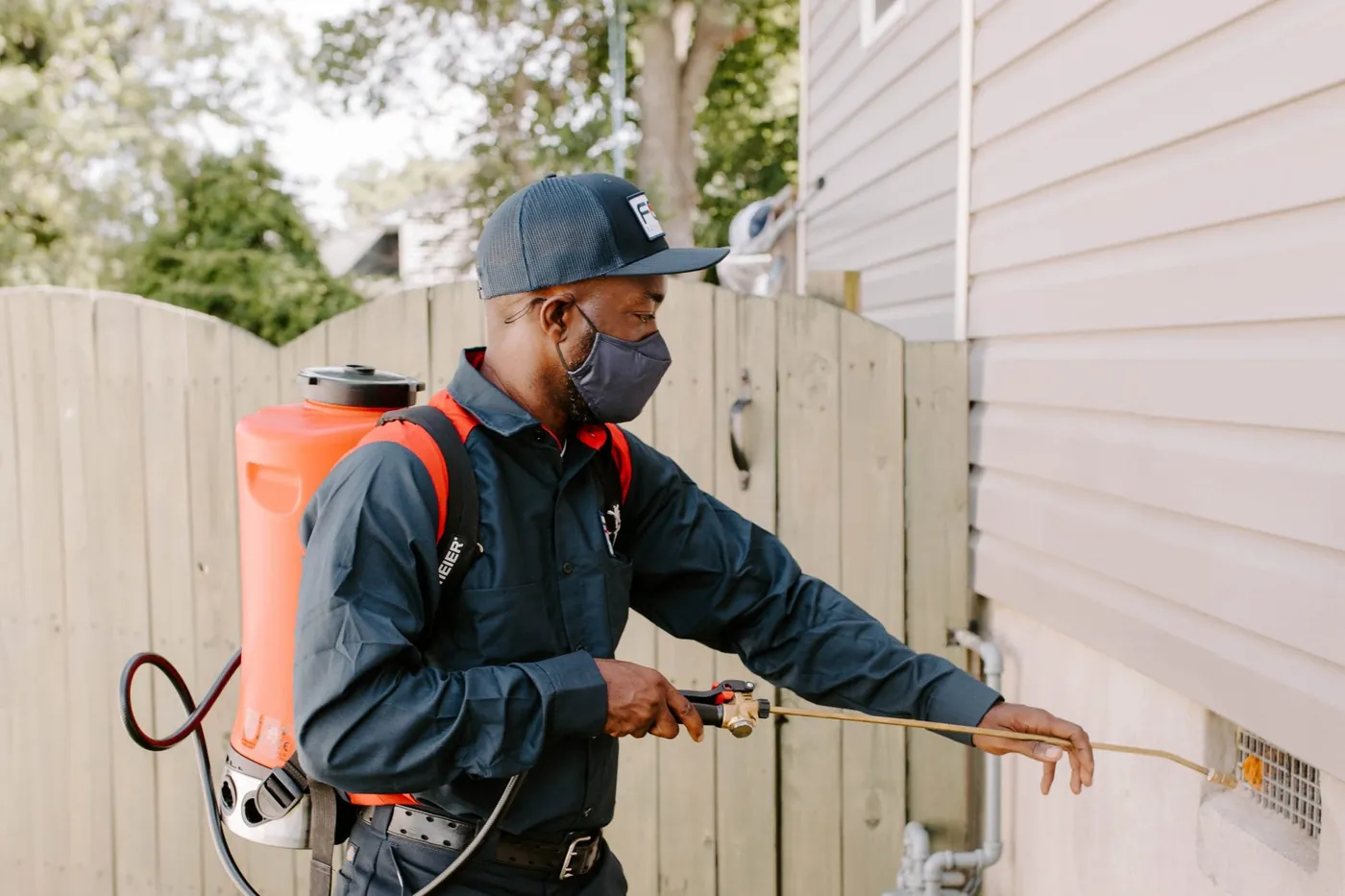
The single largest family of pest control claims is chemical, and almost all of it runs through one discipline: applying within the label and the protocol, every time, from the document rather than from memory. The label is not a suggestion — it is the legally controlling instruction for the product, and the operation that treats it that way prevents the drift, overspray, and exposure claims that the operation working from habit eventually generates. That means accounting for wind and weather before an application, respecting buffer distances and re-entry intervals, and training technicians that the right call when conditions are wrong is to stop, not to spray and hope.
The federal framework is the standard your application is measured against, and building to it is both the safety practice and the defense. The EPA pesticide program governs registered use, the EPA’s guidance on reducing pesticide drift addresses the off-target movement behind most drift claims, and applicator competence runs through the EPA certification framework administered by each state’s lead agency. An operation that can show its applications were made within that framework has prevented most chemical losses and is defensible on the few that still arise. The drift claim that does occur is the one pollution liability is written for — but the goal of this layer is to keep that claim from happening at all.
Chemical storage and handling: the exposure that lives at the shop
Not every chemical claim happens at the job site. How product is stored, mixed, transported, and disposed of at your shop and in your trucks is its own exposure — a spill, a leak in transit, an incompatible storage arrangement, a mixing-area incident. Sound handling practice is unglamorous and entirely preventable: proper containment and ventilation, segregation of incompatible products, secure transport, spill-response supplies on hand, and disposal that follows the label and the regulations. The operation that keeps this tight removes a whole category of loss that the operation with a crowded, casual storage room is quietly carrying.
Documentation and customer communication: the layer that defends you
Documentation prevents claims and wins the ones that still come. On the prevention side, clear communication — what you applied, where, what the customer should expect, any precautions about children, pets, or re-entry — heads off the misunderstanding that turns an ordinary service into a complaint. On the defense side, a consistent service record is the evidence that the work was done to standard. When a customer says the service caused harm, a neighbor alleges drift, or a buyer challenges a termite report, the operation that documented what was applied under what conditions with what consent can show what happened; the operation working from memory is arguing from nothing. Good documentation lowers both how often disputes arise and how badly they go when one does.
Technician training: loss prevention applied to the person
Most of what shows up in a loss run traces back to how a technician was trained and supervised, which makes training one of the highest-leverage places to cut claims. A technician who is certified, trained on the label and the equipment, supervised on real accounts before working alone, and held to a documented safety standard is simply less likely to cause the misapplication, the exposure incident, the fall, or the collision that becomes a claim. Training is loss prevention applied directly to the person carrying your chemical and your truck keys onto every property. The full build — recruiting, the certification path, supervised field training, and the safety culture that holds it together — is its own subject, covered in hiring and training pest control technicians.
Contracts, service agreements, and the WDO report
Clear service agreements reduce claims by reducing misunderstanding. An agreement that sets the scope, the limitations, the customer’s responsibilities, and how disputes are handled means everyone starts from the same expectations, which heads off a large share of the disputes that arise from a customer expecting something the service never promised. The enforceability of any particular waiver or limitation language varies by state and circumstance, so the agreement itself is worth having an attorney review rather than copying from a template — the loss-control value is in the clarity the contract creates up front, not in assuming a waiver makes a claim vanish.
Termite and wood-destroying-organism work deserves its own line here, because the inspection report is a professional exposure that general pest service does not carry. A clearance or inspection report that turns out to be wrong — missing active infestation a buyer later finds — is a professional liability matter, and the way to reduce those claims is inspection discipline: a thorough, documented inspection, careful and honest reporting, and clear language about the limits of any inspection. Care on the report is loss prevention for the part of the business most exposed to being wrong on paper.
Driver screening: the largest exposure hiding in plain sight
For many pest control operations the biggest single liability exposure is not the chemical at all — it is the route truck. Technicians drive most of the day, and auto collisions are frequently the largest losses on the book. The lever here is straightforward and high-return: screen motor-vehicle records before hiring, because the driving record you hire is the driving exposure you carry; set and enforce clear vehicle-use and distracted-driving policies; and monitor driving over time rather than checking once at hire. These steps directly reduce the frequency and severity of commercial auto claims, and they cost a tiny fraction of a single serious collision. And because technicians are also the people most exposed to on-the-job injury — chemicals, ladders, crawlspaces, route driving — the same training and safety discipline that protects them is what keeps workers’ compensation claims rare.
Real-World Scenario: Two operators run similar-sized books. The first treats loss prevention as overhead: hires fast without pulling driving records, lets technicians work from memory on the label, keeps a crowded storage room, and documents service loosely. The second screens every driver, runs applications from the label and the weather, keeps tight storage and handling, and documents every stop. Over a few years the difference shows up not in one dramatic event but in the loss runs — the first operator accumulates a drift complaint, a route-truck collision, and a handful of disputes that lack a paper trail; the second stays nearly clean. When renewal comes, the second operator’s coverage terms reflect the cleaner record, while the first is paying for the claims the prevention layers would have stopped. Same business on paper, very different cost of risk — and the gap is the layers, not luck.
The payoff: cleaner loss runs are the cheapest cost lever you have
Every layer above does two jobs. It prevents the operational pain of a claim — the disruption, the lost customer, the time. And it improves the record an insurer prices you on. Claims history is one of the central cost drivers behind what an operation pays, so the loss prevention that keeps your claims rare is also the work that earns you better terms and cost over time — the relationship runs both ways, with frequent or severe claims driving cost up and narrowing options, and a disciplined record doing the opposite. That is the sense in which prevention is the cheapest insurance you buy: it lowers the actual risk, and the price follows the risk.
None of these layers requires a dramatic overhaul — they require treating loss prevention as part of how the operation runs rather than as paperwork for the day a claim arrives. Build them while things are calm and the worst losses stay rare and the renewal stays friendly; let them sag and the claims arrive on schedule. When you want a coverage program built to match an operation that runs this way, start a quote, or see how the lines fit together across the coverage hub.