

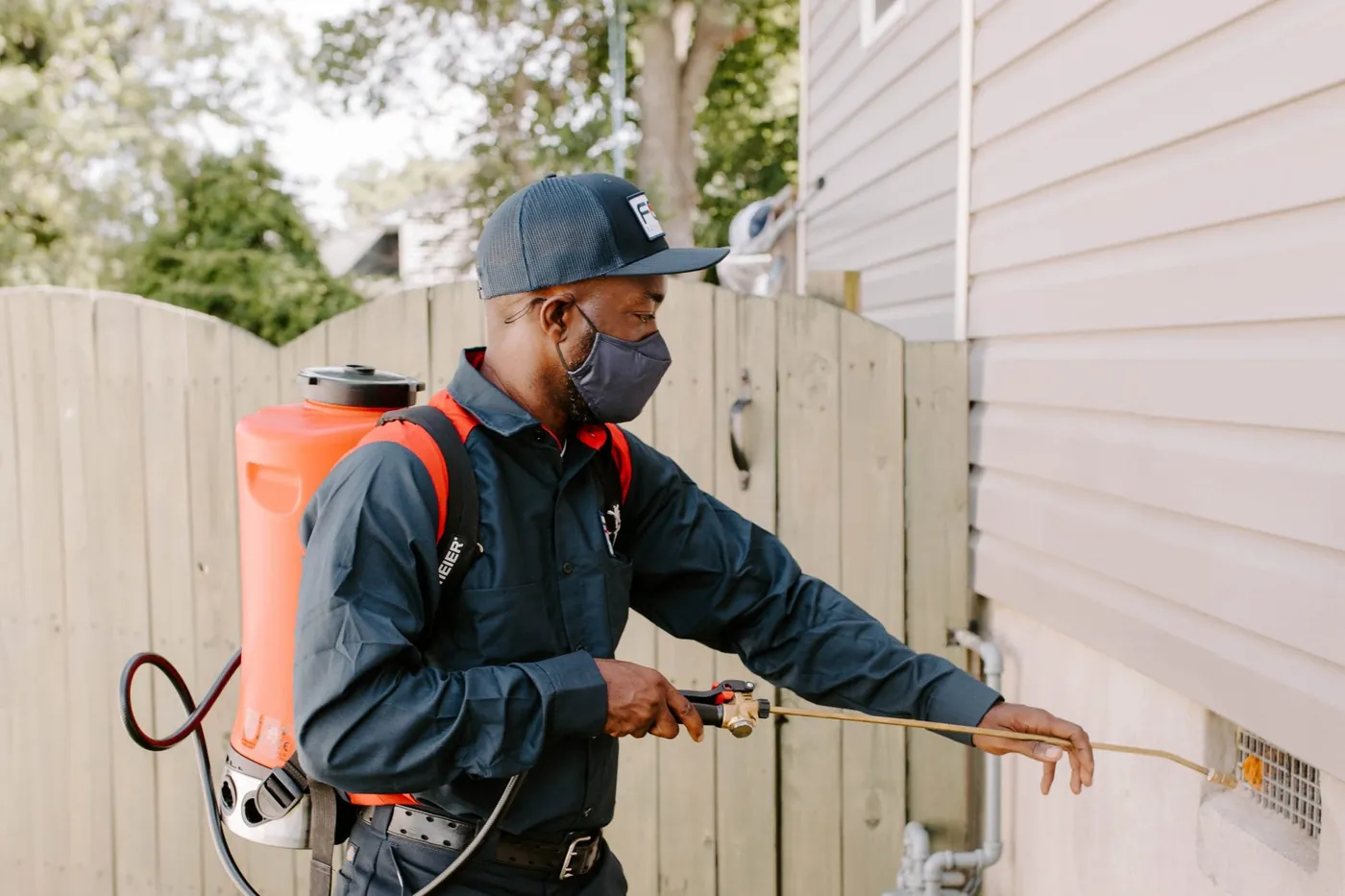
Woodbridge has no municipal government of its own. It is an unincorporated community in Prince William County, which means the licensing authority a pest control operator here deals with is the county — and the county will not issue a business licence to a contractor without proof of workers compensation coverage.
That single requirement is the most consequential local fact for an operator in this market, because it turns a coverage decision into a licensing prerequisite. What follows is where it comes from and what belongs around it.
Why this is a county question, not a Woodbridge one
Searches for pest control licensing in Woodbridge are looking for something that does not exist under that name. There is no Woodbridge town hall, no Woodbridge business licence, and no Woodbridge municipal code.
What there is, is Prince William County business licensing, administered by the county’s Tax Administration Division — whose own taxpayer services mailing address is, as it happens, in Woodbridge. The place is real and the administrative unit above it is the county.
This matters practically rather than pedantically. An operator who goes looking for a municipal requirement will find nothing and may conclude none exists, when the county requirement is both real and stricter than most municipal ones.
The requirement that decides whether you get licensed
Prince William County states that building contractors are mandated to maintain workers compensation insurance, that this is required by the Virginia Code, and that the county will verify proof of that coverage before issuing or renewing a business licence. A contractor must provide a copy of the workers compensation certification as proof.
The county is equally clear about the consequence of not doing so: a contractor who fails to provide proof of a DPOR licence or a contractor’s affidavit of exemption, and workers compensation insurance, remains responsible for the licence tax but will not receive a business licence.
Read that ordering carefully. The tax obligation attaches regardless. The licence does not. An operator can end up owing the county money and still not hold the permission the money was owed against.
Where the rule actually comes from
Not county preference — the Code of Virginia. Section 58.1-3714 provides at subsection B that the governing body of any county, city or town shall not issue or reissue a business licence under that chapter to any contractor who has not obtained or is not maintaining workers compensation coverage for his employees where he is required to, and that each governing body shall require every contractor to provide written certification at the time of application.
Two things follow from that being a statute rather than a local policy.
It is not negotiable at the counter. A county administering a state prohibition has no discretion to waive it.
And it is not local to Prince William. Every Northern Virginia jurisdiction is applying the same standard, so an operator whose routes cross county and independent-city lines meets the same requirement repeatedly rather than escaping it by moving.
The bond power most operators never hear about
The same statute contains something worth knowing, at subsection A: where a licence tax is levied on contractors by any county, city or town, the governing body may, in its discretion, require a bond from the person licensed, with such surety, penalty and conditions as it may deem proper.
That is a permission rather than a mandate, and whether a given locality exercises it is a question for that locality. But it explains why bond requirements surface unevenly across Virginia jurisdictions in a way that has nothing to do with the state applicator rules — the authority sits in the tax code, at local discretion.
If a Virginia locality does ask you for one, that is a surety instrument rather than insurance, obtained from a surety company. It is not something this agency places, and saying so early saves everybody a week.
What this does to the shape of a startup
In most states an owner-operator with no employees can begin working and add workers compensation when the first hire arrives. Here the sequencing is different for anyone the county treats as a contractor.
The certification is required at the time of application. That places the coverage decision before the licence rather than after the first payroll, and it means a solo operator has to establish their position — coverage, or a properly documented exemption affidavit — before the county will issue anything.
It is a small planning difference with a large practical effect on a start date, and it is the kind of thing that is only obvious in retrospect.
What the accounts require on top
The county sets a floor that is unusually specific about one coverage and silent about the rest. The accounts set everything else.
Northern Virginia concentrates federal contractor facilities, data centres, healthcare systems, and large multi-family and commercial property portfolios inside a small radius. Those account types routinely require liability limits well above anything a licensing rule contemplates, plus additional insured status, waivers of subrogation, and certificates issued before a crew mobilises.
Read the insurance exhibit of the contract. Between a county requirement naming one coverage and a contract naming several with limits attached, the contract is what actually governs what you buy.
The program around it
Workers compensation is the licensing-critical line here, which is unusual — in most of our markets it is the crew-protection line and nothing more.
Around it, general liability answers third-party injury and property damage, and applicator pollution liability answers what general liability is written to exclude: drift, overspray, misapplication, and chemical release. In dense multi-tenant and institutional buildings, which is most of this market, a misapplication does not stay in the space it happened in.
Commercial auto covers route trucks across some of the worst traffic in the country, and the coverage for vehicles you do not own catches the office and sales driving no truck schedule contemplates. Equipment travels on its own inland marine form. Where account requirements stack, an excess or umbrella layer sits above the primary, and the schedule underneath it matters more than its height. For crews holding keys and alarm codes to occupied buildings, employee dishonesty coverage answers what liability insurance excludes by design.
Real-world scenario. A technician with several years of route experience decides to go out on their own in Woodbridge, incorporates, and starts lining up the first accounts. The Virginia applicator credential is in hand and the trucks are sorted. The county business licence application then asks for workers compensation certification, and the operator — working alone, with no employees and no payroll — has none, because in every previous conversation about starting up, workers compensation had been described as something you arrange when you hire. The tax liability attaches anyway. The licence does not issue until the position is documented, and the first commercial account start date moves by weeks over a question nobody had flagged, because in most states it genuinely would not have come up at that stage.
What to check before you apply
Three things.
Your position on workers compensation, documented — coverage in force, or an exemption affidavit the county will accept. This is the gating item and it should be settled before the application, not during it.
Which jurisdictions your routes actually enter. Northern Virginia is a patchwork of counties and independent cities, and the licence itself does not travel even though the statutory standard behind it does.
And the insurance exhibit of your largest prospective contract, because that is where the limits you will actually be held to are written.
The county changed a contractor rule recently, which is worth noticing
Prince William announced that it has repealed its local Home Improvement Contractor Licence to streamline business regulations.
That particular licence was never the pest control credential, so the repeal does not change an applicator’s obligations directly. What it does show is that the county-level contractor rules here move independently of the state applicator rules, on their own timetable, and without anything prompting an existing licence holder to look again.
The habit that protects you is small: read the county business licence page at renewal rather than relying on what was true when you first applied. State applicator requirements change slowly and are widely reported in the trade. County business rules change quietly and are reported nowhere an operator would see.
The federal and safety backdrop
Underneath the licensing sits the framework the states administer. FIFRA is the federal statute applicator certification runs under, EPA occupational pesticide safety guidance covers handling, and OSHA personal protective equipment requirements cover the crew doing the work that the workers compensation policy exists to answer for.
Virginia sits in a moderate-termite band with real WDO inspection volume behind its home sales, which the state page covers in full — and it is why a Northern Virginia operator doing both general pest and termite and WDO work carries two quite different exposures. If you are applying for a county licence and need the workers compensation position settled first, tell us how your operation is structured.